

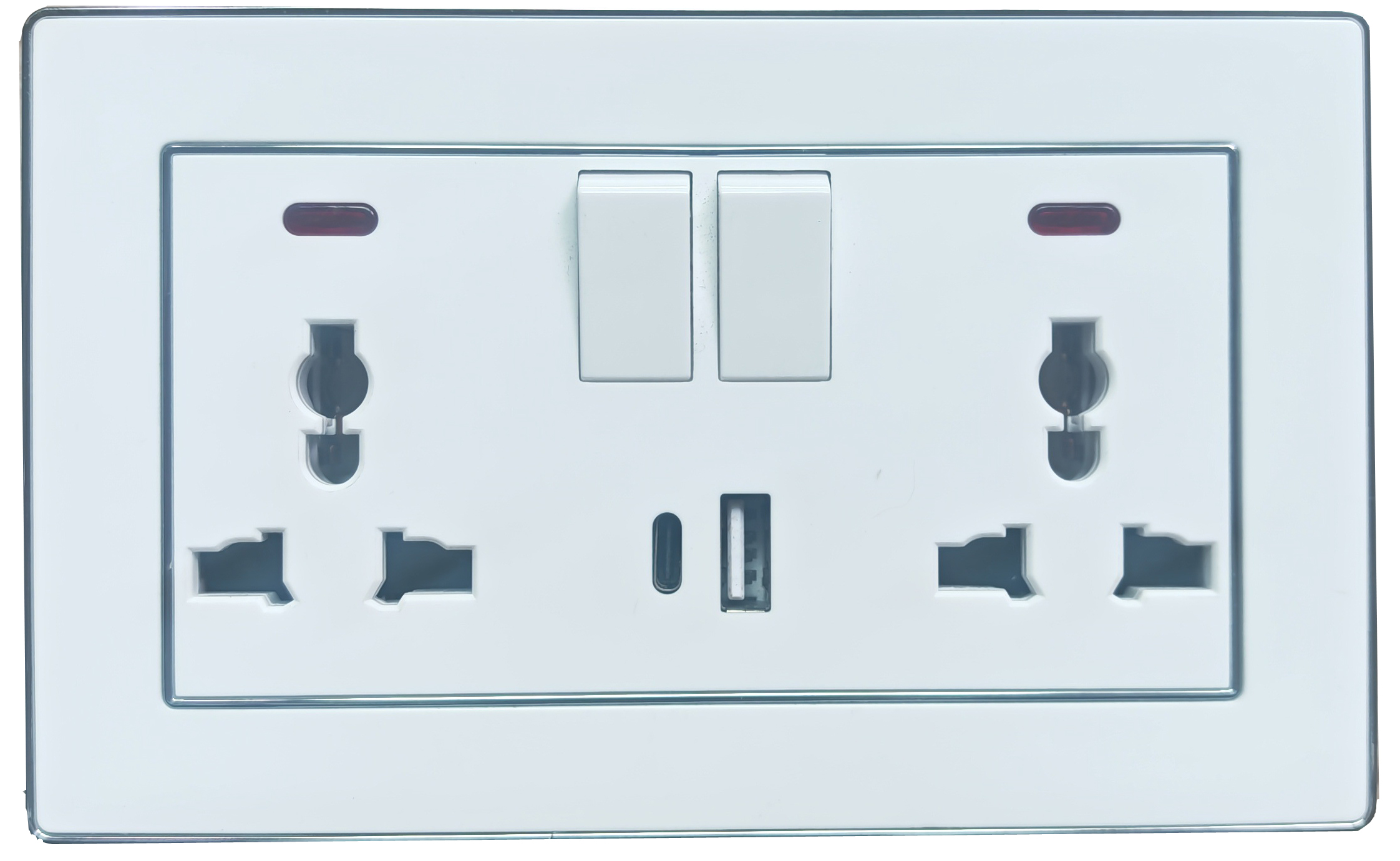
In home renovation and electrical installation, every small component is closely related to safety, and one of the most commonly used yet easily overlooked electrical components is the home wall switch.
It may seem simple, but it is responsible for starting and stopping appliances, controlling lighting, and distributing power. The current it can handle (in amperes) is a crucial indicator of its safety performance.
So, what exactly is the current rating of a home wall switch in amperes?
Can different appliances use the same wall switch?
Why are home wall switches available in 10A, 16A, or other specifications?
This article will provide a complete analysis from an electrical engineering perspective, allowing you to thoroughly understand the current standards and selection methods for home wall switches.
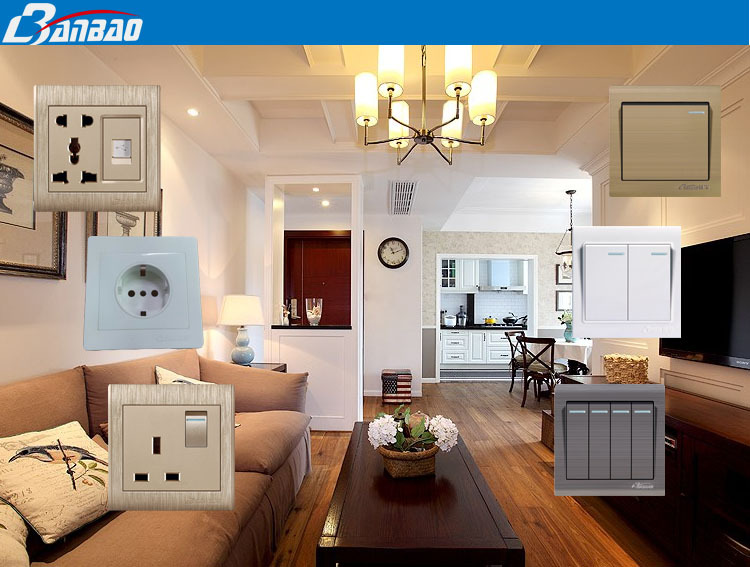
Why do home wall switches need to differentiate between different current ratings?
Current (unit: amperes, A) represents the amount of electrical energy required for an appliance to operate, and the internal structure of a home wall switch must be designed according to the current required.
Higher current ratings require:
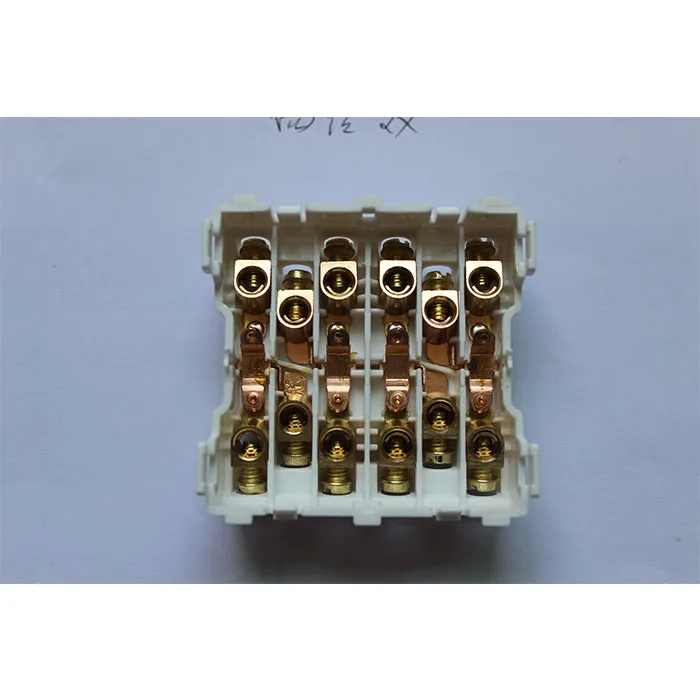
• Higher heat resistance for metal contacts
• Thicker copper plates
• Stronger flame retardancy for plastic casing
• Terminal blocks must withstand greater loads.
Therefore, the higher the amperage rating of a home wall switch, the greater the power of the appliances it can control, and the higher its safety level.
What is the standard amperage rating of a home wall switch?
Common home wall switches on the market come in two main current ratings:
• 10A home wall switch
• 16A home wall switch
These two ratings are the most common designs in current home environments and form the basis for most standard lighting and power control.
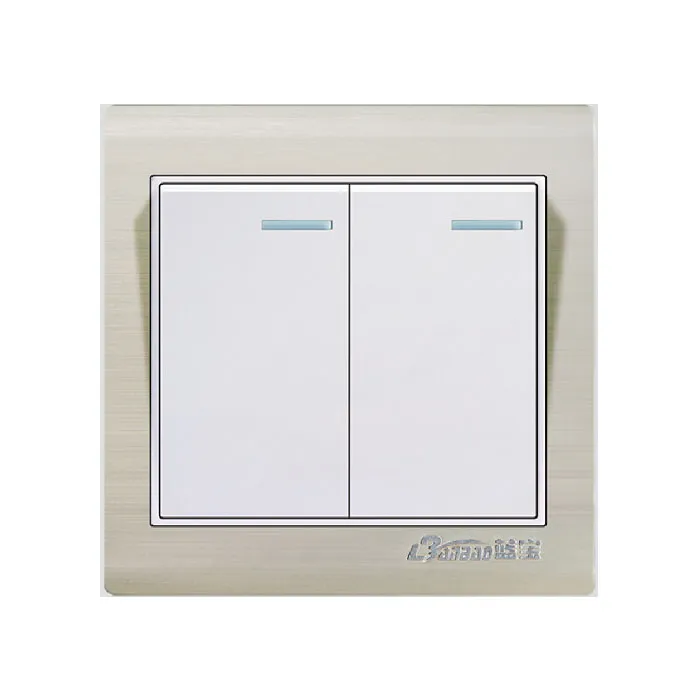
Why 10A and 16A?
Because in household electricity use, most appliances fall into the following two categories:
1. Low-power appliances (lighting, power control)
—A 10A wall switch is sufficient
2. Medium-power appliances (high-load lamps, bathroom heaters, motors)
—A 16A wall switch is safer. Different ratings correspond to different household load requirements, as detailed below.
What power rating does a commonly used 10A home wall switch correspond to?
We calculate it using the formula:
Power P (watts) = Voltage U × Current I
At 220V:
10A × 220V = 2200W
Therefore, the safe power rating of a 10A home wall switch is approximately:
2000W–2200W
This means it's ideal for the largest category of loads in a home: general lighting and low-power appliances.
What power rating does a commonly used 16A home wall switch correspond to?
The calculation is the same:
16A × 220V = 3520W
Therefore, a 16A home wall switch is suitable for: medium-to-high power loads of 3000W–3500W
It offers better performance than a 10A switch and is suitable for devices operating at higher currents.
Why can't the current rating of a home wall switch be arbitrarily changed?
Many people think "as long as it can control the appliances, it's fine," but this is a dangerous misconception.
If the current demand exceeds the rated range of the wall switch, the following risks may occur:
• Accelerated aging due to switch overheating
• Internal copper strip burning and contact damage
• Loosening or melting of wiring terminals
• In severe cases, it may lead to short circuits or even fires.
Therefore, the current rating of the home wall switch must match the actual power rating of the appliances.
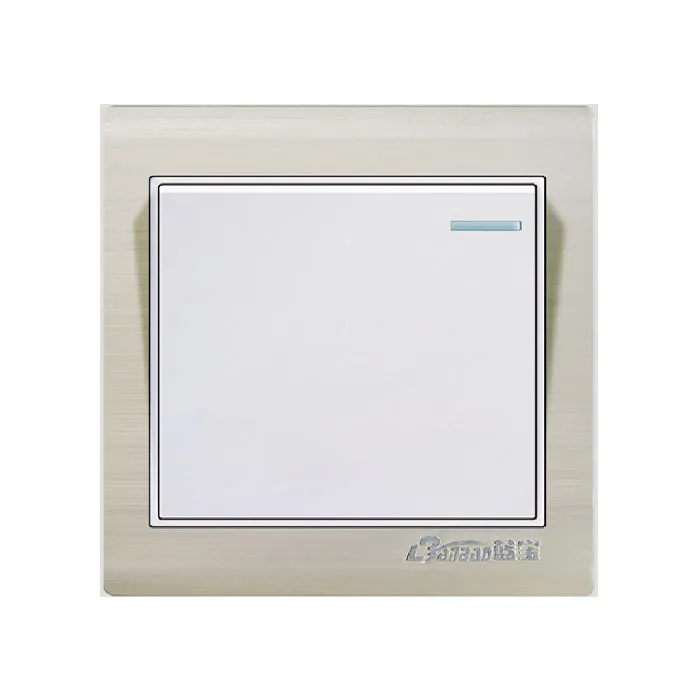
What devices are suitable for a 10A home wall switch?
This is one of the most common questions in home renovation.
A 10A wall switch is mainly used for:
• LED ceiling lights
• General lighting with single or double lamps
• Wall lamp and table lamp control circuits
• Small exhaust fans
• Low-power appliances
• Residential area lighting circuits
Why is 10A sufficient for lighting?
Because modern lighting, especially LED lamps, generally has low power ratings, typically:
• Single lamp 10W–40W
• Multi-lamp combinations mostly do not exceed 200W
This is far below the maximum load capacity of a 10A switch, therefore it is perfectly adequate.
What devices are suitable for a 16A home wall switch?
When appliances require higher power, a 16A home wall switch must be used.
Suitable applications include:
• Large crystal chandeliers and multi-lamp pendant lights
• Bathroom heaters or ventilation modules
• High-power kitchen exhaust fans
• Small instant heating devices (low-power models)
• High-load motor-driven equipment
• Large-space lighting systems
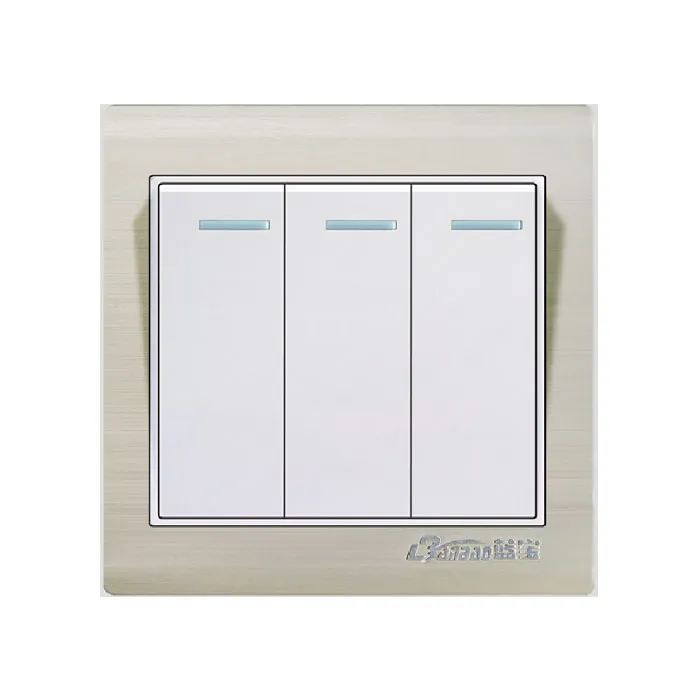
Why is a higher current required?
Because the starting and operating currents of these devices are much higher than ordinary lighting. Using a 10A switch would lead to:
• Contact damage
• Heat buildup
• Significantly shortened lifespan
Therefore, a 16A wall switch provides a greater safety margin.
What are the structural differences between 10A and 16A home wall switches?
From an electrical design perspective, the internal structures of these two types of switches differ significantly.
1. Different Contact Sizes
• Larger contacts in 16A switches
• More wear-resistant contact material
• Stronger arc protection
2. Different Copper Sheet Thicknesses
• 16A uses thicker and wider copper sheets
• Can withstand higher current and higher temperatures
3. Stronger Terminal Blocks
16A wall switches often support thicker wires, such as 2.5mm².
4. Higher Flame Retardant Casing
16A devices require a higher fire resistance rating to withstand the heat generated by the high current.
Is a higher current rating always better for home wall switches?
Many users mistakenly believe that "higher current switches are always better," but this is not entirely true.
Using mismatched specifications can cause problems:
For example:
• While a 16A switch can be used in a general lighting circuit, it's more expensive.
• Using a larger amperage switch is not worthwhile if the circuit itself is not underloaded.
• Using a high-load device with insufficient wire diameter will still exceed the amperage limit.
It's important to note: High-current switches cannot compensate for insufficient wire diameter. The current rating of a wall switch is only one part of the entire circuit; the wires, circuit breaker, and socket must all be compatible.
What should you consider when choosing the amperage for a home wall switch?
The selection criteria are crucial and mainly include:
1. Power of the controlled equipment
The higher the power of the equipment, the higher the current required.
2. Starting current requirements
Motor-type equipment has higher starting current, such as exhaust fans and bathroom heaters.
3. Circuit wire specifications
• 1.5mm² is typically used for 10A lighting circuits.
• 2.5mm² is typically used for 16A power circuits.
4. Safety margin
Choosing a specification slightly higher than the actual power of the appliance is safer.
Is the rated current of a home wall switch the same as that of a socket?
Many people wonder: Do sockets and wall switches have the same current rating?
The answer is: usually not.
Household sockets are mostly:
• 10A
• 16A
• Some national standards allow other specifications such as 13A/15A.
However, wall switches are usually designed specifically for lighting circuits, therefore:
• Most lighting uses 10A
• High-power equipment uses 16A.
Sockets and switches have different usage scenarios and safety structures, so they cannot be confused.
Does the current rating of a home wall switch affect its lifespan?
Of course.
The closer the current is to the switch's rated value:
• Shorter switch lifespan
• More severe heat generation
• Faster material aging
Therefore, electrical installations generally follow this rule: The actual current used by the wall switch should not exceed 80% of its rated current.
This can significantly improve safety and lifespan.
What is the current rating of a home wall switch in amperes?
In summary, the following conclusions can be drawn: The standard current rating for a home wall switch is typically:
• 10A
• 16A
These ratings are suitable for appliances with different power ratings.
How to choose the correct current rating for your home wall switch?
According to electrical standards:
✔ General lighting circuits → Choose a 10A home wall switch
✔ High-load lighting, motors, or bathroom heaters → Choose a 16A home wall switch
Matching the correct rating not only ensures stable operation of your equipment but also significantly improves the safety of your home's electrical system.
Are discounts or promotions available for repeat or bulk purchases?
Yes. We offer tiered pricing and seasonal promotions for repeat buyers and bulk purchasing. Buyers who commit to regular purchase volumes or long-term supply agreements can access lower unit prices, priority production slots, and promotional packages. Our sales team issues formal quotes that include discount structures and promotional validity periods, helping procurement officers plan purchases and budgets.
