

In household and commercial electrical environments, the rated parameters of wall switches and sockets are often overlooked, yet they directly affect electrical safety and stable equipment operation. Among these, "How many watts is a 16A wall switch?" is a very common but easily misunderstood question.
Many people, when choosing high-power appliances or replacing sockets, simply believe that "the higher the current, the higher the power," but the reality is not that simple.
This article will start with the basic relationship between current, voltage, and power, systematically explaining the power range of a 16A wall switch under different conditions, helping you truly understand: 16A does not equal a fixed wattage; it depends on the voltage and usage.
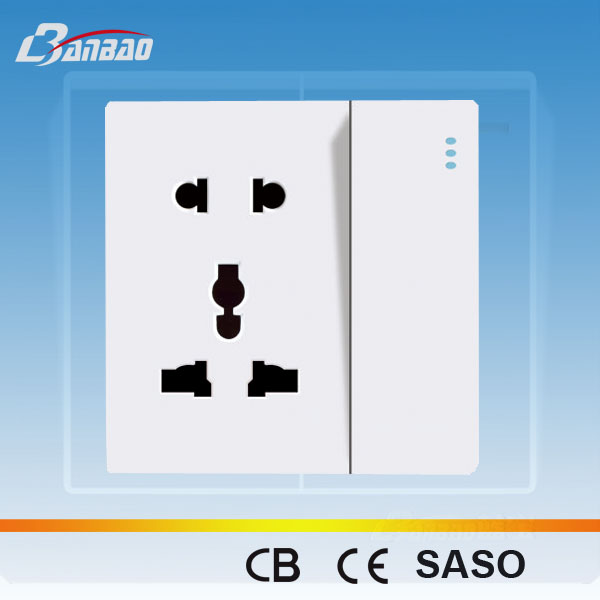
What is the relationship between current, voltage, and power?
Before discussing how many watts a 16A wall switch is, we must first understand a fundamental question: How is power calculated?
In AC systems, the most basic calculation formula is:
Power (W) = Voltage (V) × Current (A)
That is to say, current is only one variable. Looking at "16A" alone does not directly give the wattage; it must be determined in conjunction with the voltage.
In practical use, 16A wall switches are typically paired with two main voltages:
• 220V~240V (China, Europe, Southeast Asia, etc.)
• 110V~120V (some other countries or special systems)
Therefore, the power rating of a 16A wall switch varies significantly depending on the voltage system.
How many watts does a 16A wall switch have at 220V?
This is the most pressing question for most users and is the most common situation in Chinese household electricity environments.
According to the formula:
Power = 220V × 16A = 3520W
That is to say, under a rated voltage of 220V, the theoretical maximum power that a standard 16A wall switch can handle is approximately:
3520 watts (approximately 3.5kW).
It is important to emphasize that this value is a theoretical upper limit, representing the maximum power allowed under rated conditions, and does not mean that it can operate at full load continuously.
From a professional perspective, a 16A wall switch is more suitable for:
• Medium to high power household appliances
• Equipment requiring a stable and continuous power supply
• Loads with power significantly higher than a standard 10A socket
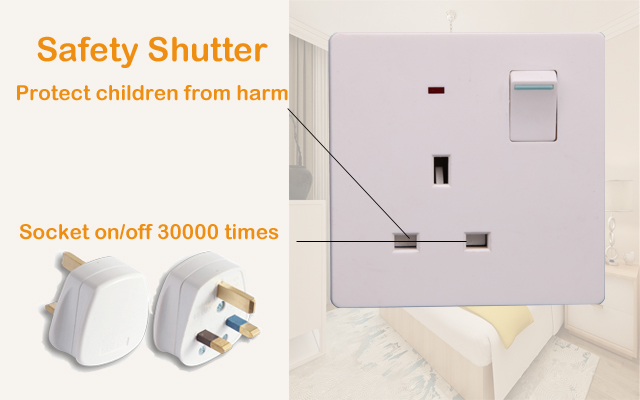
Will a 16A wall switch have a higher power output at 240V?
In some countries or regions, the actual grid voltage may be close to 240V. In this case, the power calculation is:
Power = 240V × 16A = 3840W
That is to say, the higher the voltage, the greater the power output under the same 16A current condition.
However, it's important to note that the rated power design of wall sockets and wall switches typically already accounts for voltage fluctuations. Even in a 240V environment, a qualified 16A wall switch should be able to safely handle the corresponding load.
Why can't it be simply understood as "16A = 3500W"?
This is a common mistake.
While the calculated power of a 16A wall switch is 3520W in a 220V environment, it's not recommended to use it close to this limit for extended periods in practice. Reasons include:
• Resistance exists in the copper components inside the socket.
• High current over a long period generates heat.
• Limited heat dissipation from the wall.
• Aging wiring or poor contact amplifies the risk.
Therefore, engineering and electrical codes generally recommend keeping the long-term power consumption around 70%–80% of the rated power.
This is why even a 16A wall switch does not mean "unrestricted and safe use of 3.5kW devices."
What is the difference between a 16A wall switch and a 10A wall socket?
To better understand the advantages of a 16A wall switch, we can compare its specifications (this comparison is purely parameter-based and does not include real-world examples).
Under 220V voltage:
• 10A socket power ≈ 2200W
• 16A socket power ≈ 3520W
Numerically, the power output of a 16A wall switch is significantly higher than that of a standard 10A socket, increasing by almost 60% or more.
This is why:
• 10A is commonly used for general lighting and televisions
• 16A wall switches are preferred for medium to high power devices.
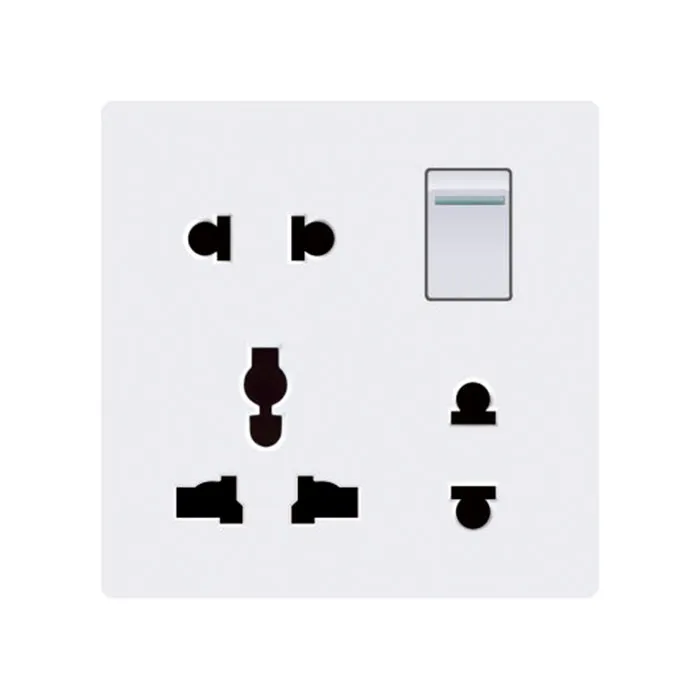
Are 16A wall switches and 16A wall switches the same thing?
This is a very important but often confused question.
16A Wall Switch ≠ 16A Wall Switch
• Wall switch: Primarily used to control the on/off state of a circuit.
• Wall socket: Used to connect electrical equipment and carry loads.
Even if both are labeled 16A, their design focuses differ:
• 16A wall switches prioritize contact current-carrying capacity.
• 16A wall switches prioritize continuous current carrying capacity and insertion/removal stability.
When discussing "how many watts is a 16A wall switch," what truly matters is the current-carrying capacity of the 16A wall switch itself.
Why are 16A wall switches usually larger?
If you observe closely, you'll find that 16A wall switches typically:
• Have larger sockets
• Have a thicker internal structure
• Have wider copper contacts
This isn't a wasteful design choice, but rather because higher current requires lower contact resistance and better heat dissipation.
From a professional perspective, a 16A wall switch must meet the following structural design requirements:
• Higher continuous current carrying capacity
• Lower temperature rise
• More stable mechanical strength
This is why a 10A socket cannot be "barely" used to handle 16A of power.
Is wiring important when using a 16A wall switch?
Very important.
Even with a qualified 16A wall switch, there is still a risk if the upstream wiring cannot handle the corresponding current.
The wiring matched with a 16A wall switch typically requires:
• Sufficient conductor cross-sectional area
• Stable connection method
• Qualified insulation materials
From a system perspective, the socket is only one link in the power supply chain, not the entirety.
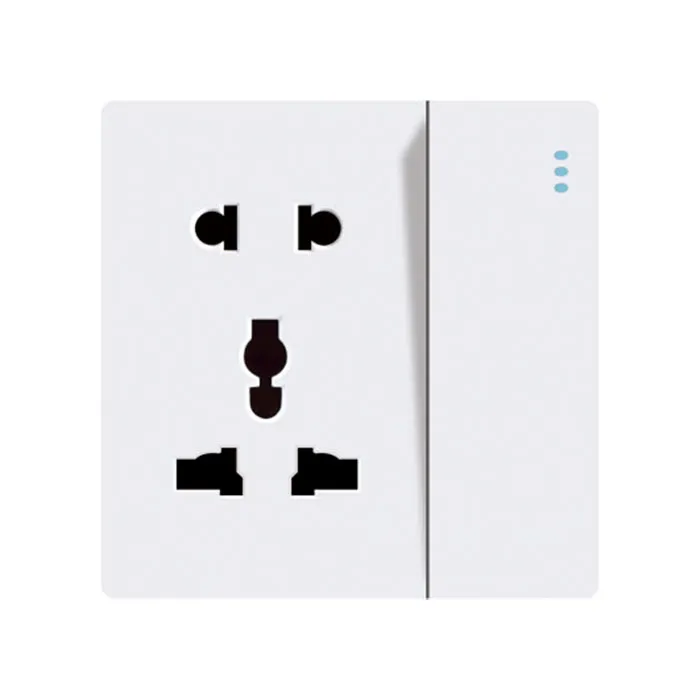
Is a 16A wall switch suitable for long-term high-power use?
While the rated parameters indicate that a 16A wall switch is indeed designed for medium to high power loads, this does not mean it can operate at full load continuously.
The professional understanding should be:
• 16A is the maximum allowable current.
• It is not the recommended long-term operating current.
In actual power planning, leaving a reasonable margin is the safest and most stable way to use electricity.
How to determine the safe power of a 16A wall switch from a parameter perspective?
Summarizing the above, you can comprehensively judge from the following aspects:
1. What is the rated voltage (220V / 240V)?
2. Is the rated current 16A?
3. Is it a standard 16A wall switch?
4. Has a reasonable power margin been reserved?
In a 220V environment, the reasonable power consumption of a 16A wall switch should generally be understood as:
Approximately 2500W to 3000W is more prudent.
What makes your modern switch and socket lines unique in the market?
Our modern switch and socket collections emphasize minimalist styling, structural durability and user-friendly operation. With strong R&D investment, we refine tactile feedback, surface textures and internal mechanisms to meet current lifestyle trends. Buyers who purchase our products gain access to updated designs that stand out visually while maintaining strong electrical safety performance.
As a factory and manufacturer, we provide low-price mass-market options, premium series for upscale brands, and fully customized finishes for buyers who want to differentiate their own product lines.
