


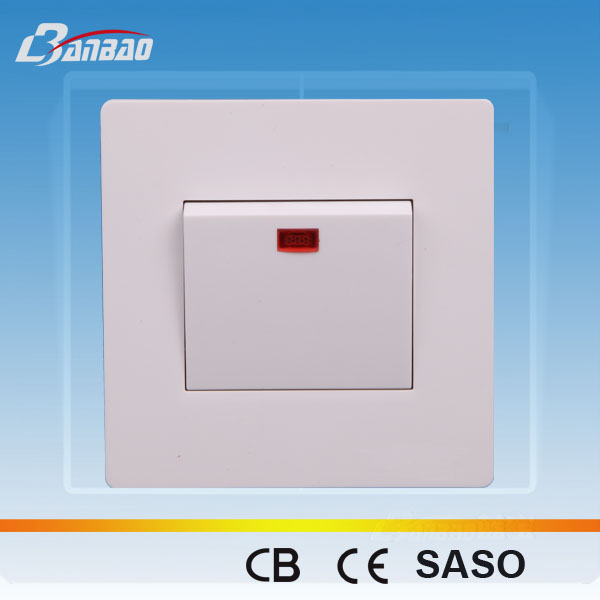
In residential, commercial, and professional electrical installations, wall switches are more than just "buttons to control lights." When dealing with high-power appliances or fixed equipment, ordinary wall switches are insufficient for safety and reliability requirements. This is where a specialized electrical control device—the 45A DP Wall Switch—comes in.
Many people have questions when they see this product:
What does 45A represent?
What does DP mean?
Why use a 45A DP Wall Switch instead of a regular wall switch?
To truly understand a 45A DP Wall Switch, it's necessary to analyze it from multiple perspectives, including electrical ratings, double-pole disconnection principle, usage scenario logic, and safety design objectives.
This article will systematically and professionally answer these questions, helping you clearly understand the essence and function of a DP Wall Switch.
What does "45A" mean in a 45A DP Wall Switch?
In electrical products, "45A" refers to the maximum rated current that a DP wall switch can safely carry and interrupt, which is 45 amperes.
This definition has very clear implications:
• This is under standard voltage, compliant installation, and normal environmental conditions.
• It represents the upper limit of current that can be safely passed over a long period.
• It reliably disconnects the circuit without damaging the contacts when the switch is activated.
45A is a high current rating, significantly higher than common ratings such as:
• 10A wall switches
• 13A wall switches
• 20A DP wall switches
Therefore, a 45A DP wall switch is not designed for general lighting or low-power outlets, but rather for high-load fixed equipment.
What is a DP wall switch?
"DP" is an abbreviation for Double Pole, commonly referred to in Chinese as:
Double-pole wall switch
This means:
• When the wall switch operates,
• it disconnects both wires simultaneously
• typically the live wire and the neutral wire
This is the fundamental difference between a DP wall switch and a regular single-pole (SP) wall switch.
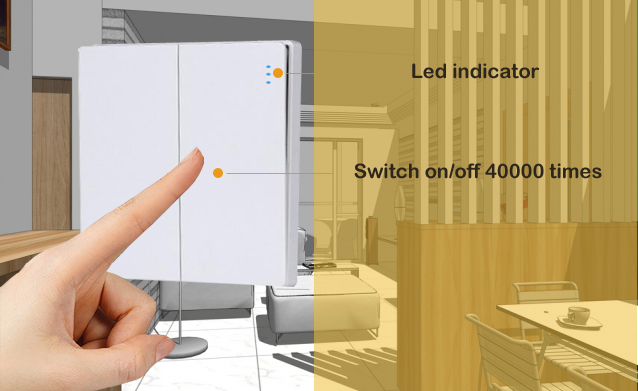
What are the differences between a DP wall switch and a regular wall switch?
A regular wall switch is generally a single-pole (SP) switch, characterized by:
• disconnecting only one wire
• typically the live wire
• the other wire remains connected to the power supply
While a DP wall switch is characterized by:
• simultaneously disconnecting both the live and neutral wires
• complete isolation from the power supply when the device is "off"
• significantly reducing the risk of accidental electric shock or residual voltage
This is the fundamental reason why DP wall switches are used in high-power devices.
What power can a 45A DP wall switch handle?
The power calculation formula is:
P = V × I
In a common 230V~250V system:
• 45A × 230V ≈ 10,350W
• 45A × 250V ≈ 11,250W
This means:
A 45A DP wall switch can theoretically control electrical loads of 10kW or more.
This level of power far exceeds the needs of ordinary household appliances.
Why use a 45A DP wall switch?
The main reasons are as follows:
1. Huge difference in current rating
The rated current of ordinary wall switches is usually:
• 10A
• 13A
• or 16A
Far from being able to handle a 45A level current.
2. Completely Different Contact Structure
45A DP WALL SWITCH typically features:
• Thicker silver alloy contacts
• Larger contact area
• Higher arc resistance
These are features not found in ordinary wall switches.
3. Safety Requirements of Double-Pole Isolation
For high-power equipment, simply disconnecting the live wire is insufficient.
DP WALL SWITCH can:
• Ensure complete power disconnection
• Facilitate maintenance
• Reduce potential safety risks
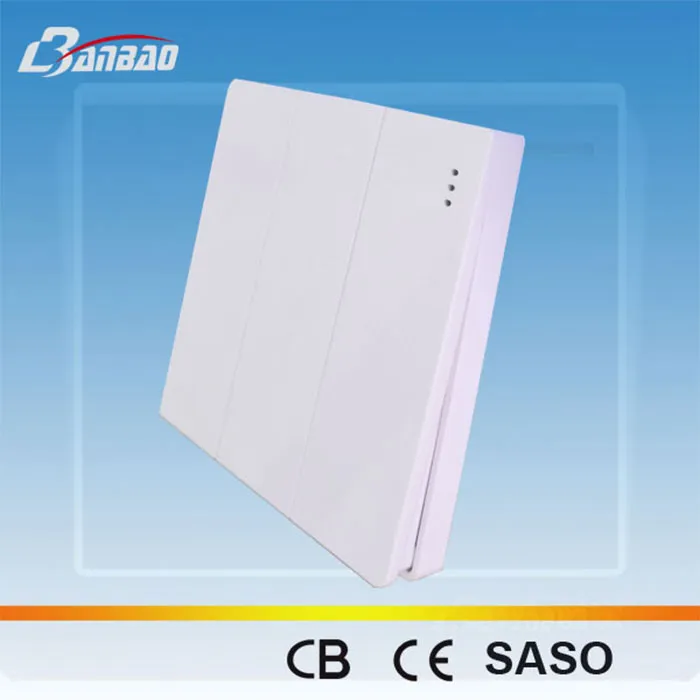
What is the internal structure of a 45A DP WALL SWITCH?
A typical 45A DP wall switch usually includes:
• Bipolar mechanical linkage
• High-load-bearing silver alloy contacts
• Reinforced spring system
• High-temperature resistant insulating housing
• Large cross-sectional area terminals
These components work together to ensure:
• Reliable conduction under high current
• Effective arc suppression upon disconnection
• Stable performance over long-term use
What is the difference between a 45A DP wall switch and a 20A DP wall switch?
The main differences are:
1. Rated Current
• 20A DP Wall Switch: Medium load
• 45A DP Wall Switch: High load equipment
2. Dimensions and Weight
45A DP Wall Switch typically:
• Thicker
• Heavier
• Requires deeper wall junction boxes
3. Wiring Capacity
45A DP Wall Switch supports:
• Thicker wires
• Larger terminals
Why must a DP Wall Switch be double-pole?
From an electrical safety perspective, the answer is: Yes, it is necessary.
Reasons include:
• The neutral wire is not always at zero potential
• Incorrect wiring can cause the neutral wire to become live
• Disconnecting the double poles prevents residual voltage in the circuit
Therefore, in high-power equipment, a DP Wall Switch is a safer and more compliant choice.
What is the wiring logic for a 45A DP Wall Switch?
While not delving into operational details, the principle is as follows:
• Input terminals connect to the power supply's live and neutral wires.
• Output terminals connect to the equipment's live and neutral wires.
• The switch controls both poles simultaneously upon activation.
This structure ensures:
• Complete on/off operation of the equipment.
• No "partial power outage" state.
Can a 45A DP Wall Switch replace a circuit breaker?
It's important to clarify:
The 45A DP Wall Switch is a control device, not a protection device.
Its functions are:
• Manual on/off control.
• Providing isolation.
Not:
• Overload protection.
• Short-circuit protection.
These functions still need to be performed by circuit breakers or fuses.
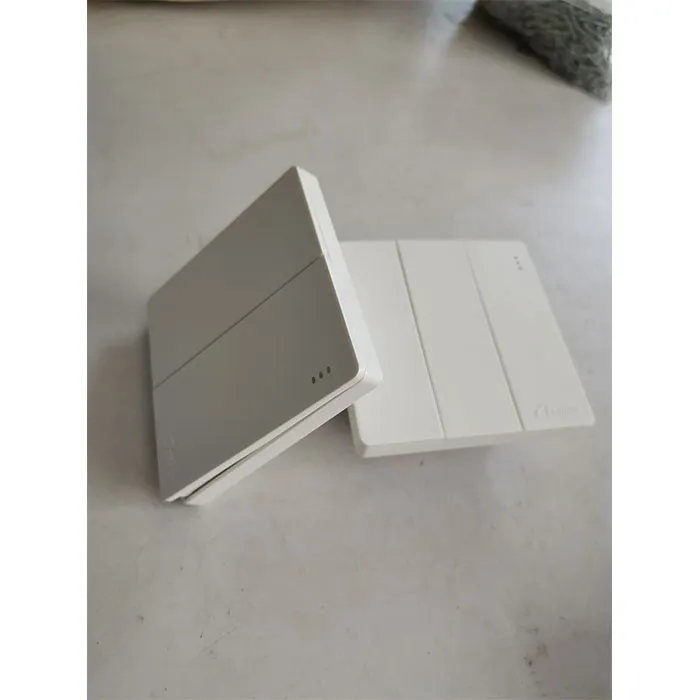
What are the characteristics of the operating environment for a 45A DP Wall Switch?
From an electrical design logic perspective, a 45A DP wall switch is typically used for:
• High-power stationary electrical appliances
• Equipment requiring complete electrical isolation
• Circuits with long-term operation or high-current loads
Common characteristics include:
• High current
• High risk
• High reliability requirements
Is a DP wall switch necessarily "safer" than a single-pole switch?
From an electrical isolation perspective:
• DP wall switches provide a more complete power-off state
• Particularly suitable for high-power or maintenance-intensive equipment
However, this does not mean:
• DP wall switches must be used in all scenarios
Instead, the following should be followed:
The higher the load level, the more necessary it is to use a DP wall switch.
What are some common misconceptions about 45A DP wall switches?
Misconception 1:
"A 45A DP wall switch is just a larger, ordinary switch."
👉 In fact, it is designed specifically for high loads and complete isolation.
Misconception 2:
"DP just involves disconnecting one more wire, it makes no difference."
👉 Bipolar disconnection has a fundamental difference in terms of safety.
Misconception 3:
"As long as the appliance's power isn't that high, a DP wall switch isn't necessary."
👉 Power is only one factor; safety isolation is equally important.
