

With the continuous improvement of modern home audio-visual systems, "satellite TV wall sockets" have become an indispensable part of residential wiring. Although many people encounter these sockets during renovations, they often lack understanding of their structure, function, and operating principles.
In fact, a satellite TV wall socket is not an ordinary wall socket; it is a low-voltage connection port specifically designed for the transmission of television signals, satellite signals, and radio frequency signals, and is a crucial component for the stable operation of a home audio-visual system.
To help more users, homeowners, and low-voltage engineers understand the professional characteristics of this socket, this article will provide a systematic analysis from multiple perspectives, including structural definition, purpose, signal types, interface standards, installation principles, and precautions.
What is a Satellite TV Wall Socket?
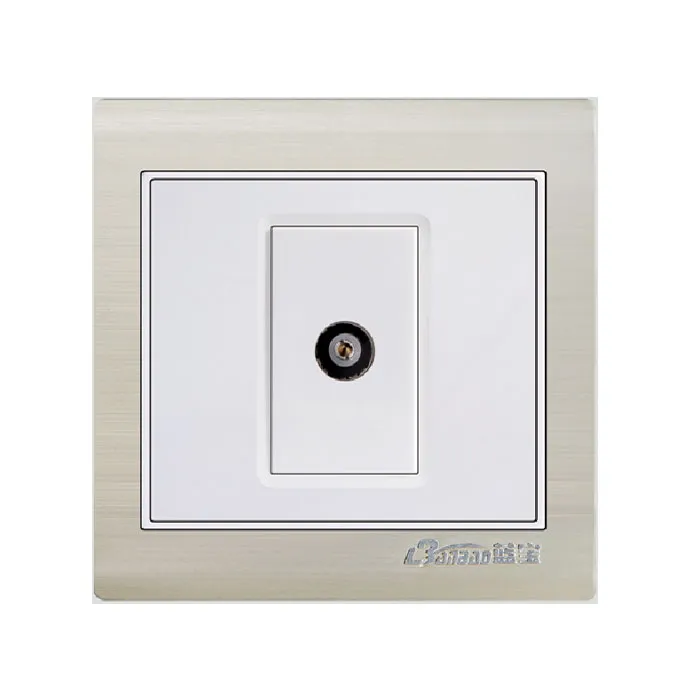
A satellite TV wall socket is a low-voltage connection port used for transmitting TV signals, satellite signals, and radio frequency (RF) signals. Its main functions are:
• Neatly concealing antennas or satellite signal cables within the wall, maintaining an aesthetically pleasing home wiring appearance.
• Providing a stable RF signal connection for devices such as TVs, set-top boxes, and satellite receivers.
• Separating different types of signals (such as terrestrial TV signals, satellite signals, and FM radio signals).
• Providing a safer and more reliable signal interface without exposing bare wires.
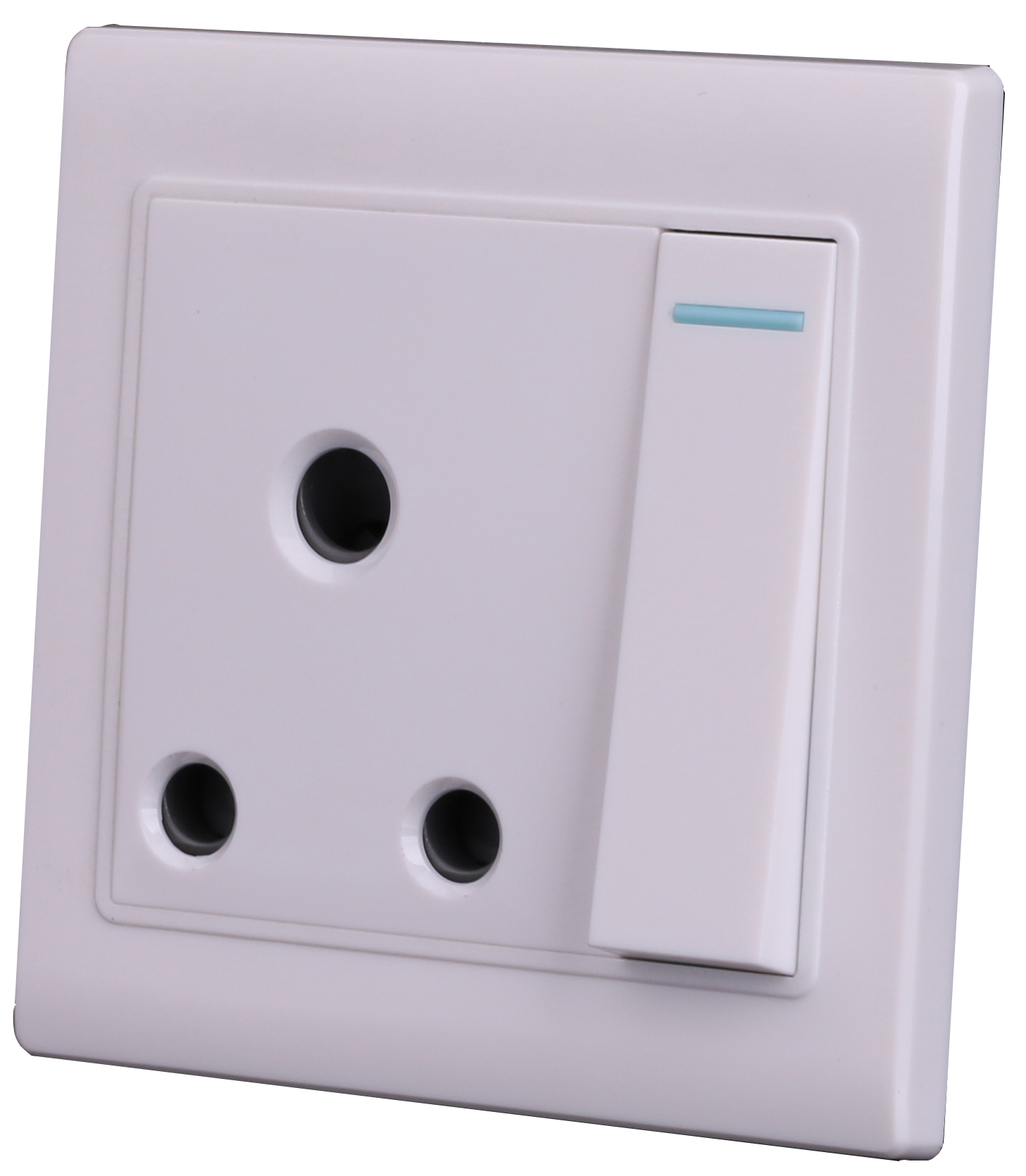
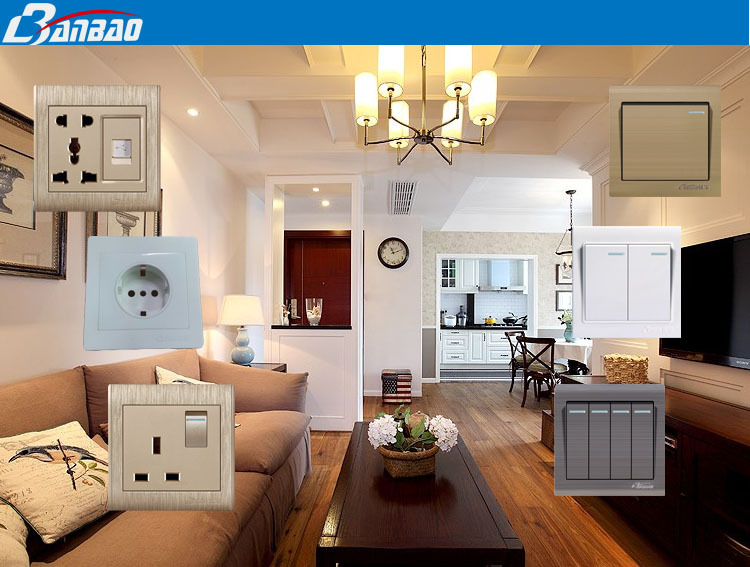
These sockets are typically installed inside wall panels and look similar to ordinary wall sockets, but their function is completely different.
Key characteristic: Satellite TV wall sockets only transmit signals, not power, unlike 220V or 110V high-voltage sockets.
What types of satellite TV wall sockets are there?
Satellite TV wall sockets can be categorized as follows based on signal type and interface type:
1. Television (TV) Socket
Uses:
• Transmit terrestrial digital television signals
• Transmit analog television signals
• Suitable for terrestrial broadcast systems such as DVB-T / ISDB-T / ATSC
Features:
Uses a traditional coaxial F-type connector or IEC connector.
2. Satellite (SAT) Socket
Uses:
• Receiving satellite television signals
• For connecting satellite receivers or satellite set-top boxes
Features:
• Typically uses an F-Type nut connector
• Requires higher frequency bandwidth
• Designed for LNB (Low Noise Amplifier) power return signals
Satellite signals are completely different from ordinary television signals, therefore a dedicated interface must be used.
3. FM / DAB Radio Socket
Some satellite TV wall sockets also feature:
• FM radio interface
• DAB digital radio interface
For audio systems to receive broadcast signals.
4. Multi-functional Combination Satellite TV Wall Socket
Common combinations include:
• TV + SAT
• TV + FM + SAT
• TV + FM + DAB + SAT
• Dual Satellite (SAT + SAT)
• TV + Network Interface (RJ45) + SAT
This type of socket is often used in the home theater center.
How does a satellite TV wall socket work?
Internally, a satellite TV wall socket transmits signals via a coaxial cable. Common coaxial cables include:
• RG6 (most common, suitable for satellite signals)
• RG59 (older standard, used for low-frequency signals)
Its main operating methods include:
1. Transmitting high-frequency radio frequency signals (RF signals)
The satellite TV wall socket is responsible for transmitting high-frequency radio frequency signals received from the antenna or satellite, using a special shielding design to prevent signal interference.
2. Isolation of Terrestrial and Satellite Signals
Some satellite TV wall sockets have built-in splitters or filters to:
• Block different frequency bandwidths
• Provide independent ports (TV, SAT, FM, etc.)
• Reduce signal crosstalk
• Maintain signal quality
3. Support for Satellite Power Backhaul
Satellite receivers need to transmit power (typically 12V–18V) to the LNB via coaxial cable. Therefore, the satellite interface must support power backhaul, a function not available in standard TV interfaces.
What is the internal structure of a satellite TV wall socket?
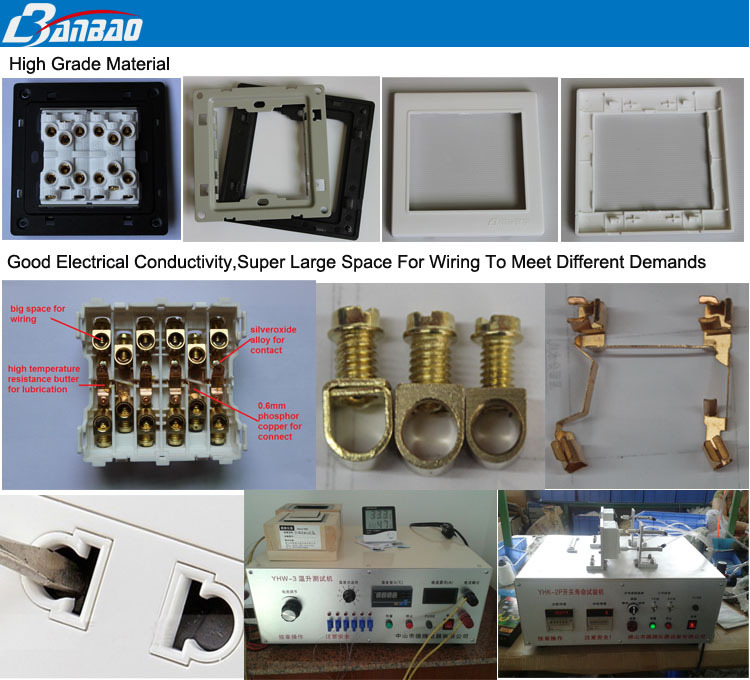
A typical satellite TV wall socket includes:
1. Coaxial Connector
Used to securely connect the coaxial cable inside the wall to the socket panel.
2. RF Splitter or Divider
Used to separate TV/SAT/FM signals.
3. Signal Filtering Module
Used to block irrelevant frequency bands and reduce interference.
4. Shielding
Prevents external electronic devices from affecting signal quality. 5. Panel Interfaces (e.g., F-Type, IEC)
Provides standard signal output interfaces.
This structure ensures long-term stable operation of the satellite TV wall socket.
What are the interface standards for satellite TV wall sockets?
Common interfaces include:
1. F-Type Threaded Interface
Features:
• The most common satellite TV interface
• More secure nut fixation
• Suitable for high-frequency signals
• Widely used in set-top boxes and satellite receivers
2. IEC Interface (Male/Female)
Features:
• Mostly used for traditional TV antenna signals
• Simple plugging and unplugging
• Used for general terrestrial broadcasting
3. Dual F-Type Interface
Used for dual-channel satellite reception, such as:
• PVR dual recording function
• Multi-tuner devices
4. TV + SAT Combination Interface
Used for conventional home TV system wiring.
What are the installation methods for satellite TV wall sockets?
1. Direct Connection with Coaxial Cable
Connection is completed using crimp or nut-type terminals.
2. Avoid running parallel to high-voltage power lines
Radio frequency signals are easily interfered with, so low-voltage wiring must maintain a safe distance from high-voltage wiring.
3. The junction box depth must be sufficient
Especially for combination sockets with splitters, which have many internal components.
4. The socket should be close to the TV equipment area
This improves signal stability.
5. Use adapter plugs
TV uses IEC, satellite uses F-Type.
Why do TV satellite wall sockets need shielding?
Reasons include:
1. High-frequency signals are more susceptible to interference
Satellite signals operate at frequencies up to GHz, requiring strong shielding.
2. Prevent interference from high-voltage equipment
Such as power cords, Wi-Fi routers, induction cookers, etc.
3. Prevent signal leakage
Improve signal integrity.
4. Avoid ground loop interference
Maintain signal stability.
What are the application scenarios for TV satellite wall sockets?
Typical applications include:
• Receiving satellite TV programs
• Connecting to DVB-T terrestrial digital TV
• Multi-screen TV systems
• Home theater systems
• Low-voltage wiring systems
• TV interfaces in living rooms and bedrooms
Wherever there is a need for TV signal access, a satellite TV wall socket is almost always essential.
How is the signal stability of a satellite TV wall socket ensured?
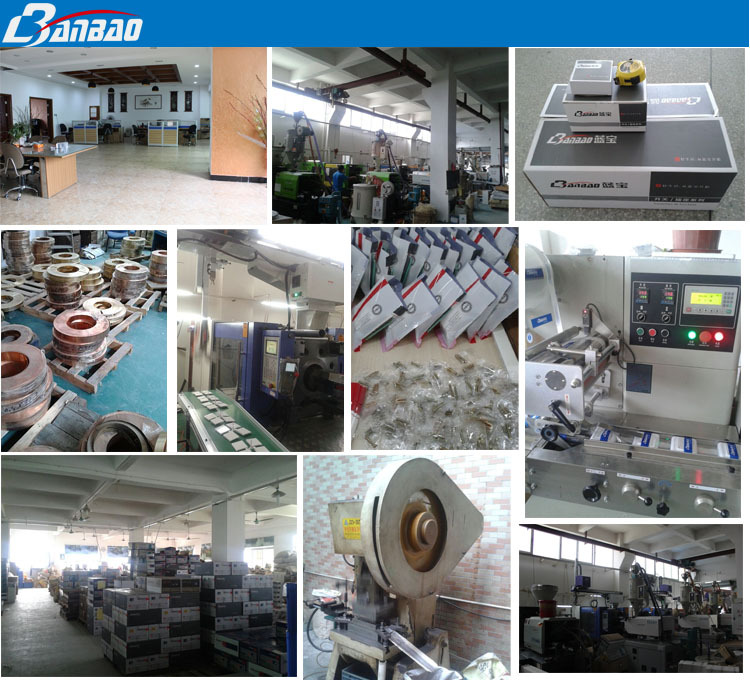
Influencing factors include:
1. Coaxial cable quality
Using RG6 is more stable than RG59.
2. Quality of the splitter inside the socket
A high-quality splitter reduces signal loss.
3. Tightness of the connector insertion
Looseness leads to signal attenuation.
4. Environmental electromagnetic interference
Poor location can affect signal stability.
5. Excessive loop length
The longer the coaxial cable, the greater the signal attenuation.
A satellite TV Wall Socket is an Important Component of a Home Theater System
A satellite TV wall socket is a professional wall interface used to transmit TV, satellite, and radio frequency signals.
Its functions include:
• Providing stable input for TV and satellite signals
• Organizing wiring for a cleaner wall surface
• Providing multiple signal interfaces such as TV, FM, and SAT
• Supporting high-frequency satellite signals and power return
Common interfaces for TV/satellite wall sockets include:
• TV (IEC)
• SAT (F-Type)
• FM / DAB
• Multiple combination interfaces
If your home requires a TV, satellite TV, radio, or audio-visual system, then a TV/satellite wall socket is an essential component.
