


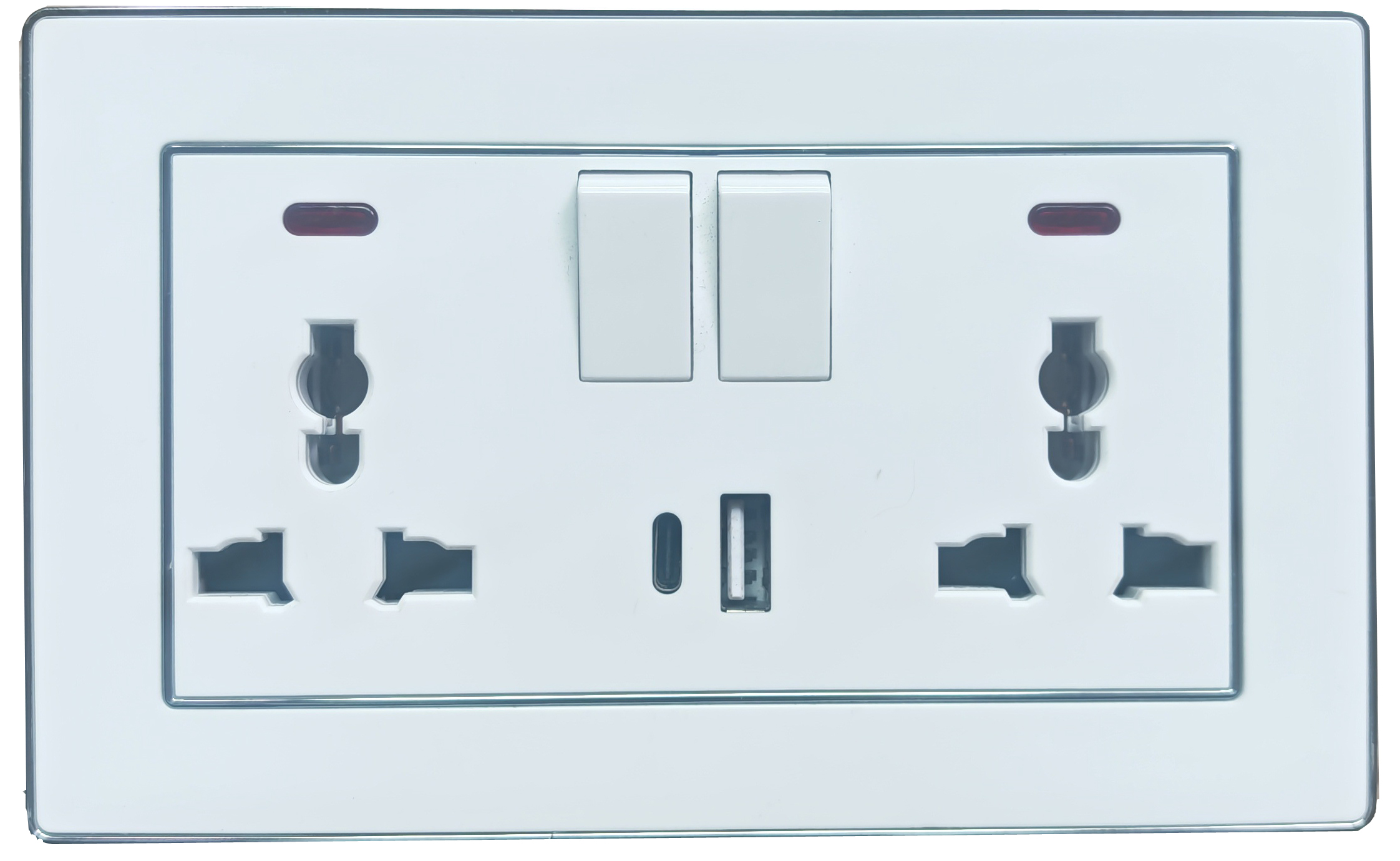
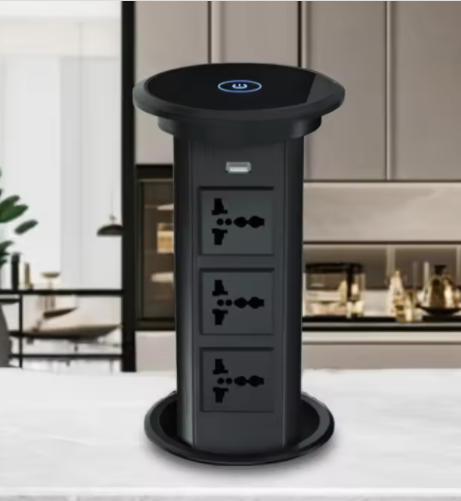
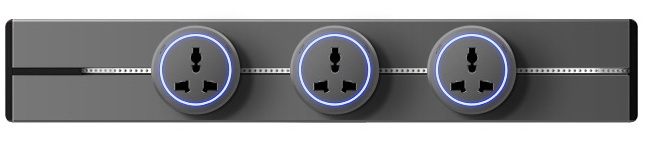
In homes, hotels, offices, and public buildings in the UK, you'll find that almost every UK wall socket has a separate red or white switch. This differs from sockets in most other countries and often raises questions for first-time users: Why is there a switch on a UK wall socket?
In fact, the switch on a UK wall socket is a crucial component of the UK's electrical safety system, its core function being to provide enhanced electrical control and safety. Understanding the meaning and function of this switch is essential for anyone using the UK electrical system.
This article will provide a comprehensive and professional explanation of the purpose, safety features, working principle, differences from sockets in other countries, and necessity of the UK wall socket switch in daily use, giving you a full understanding of why this switch exists.
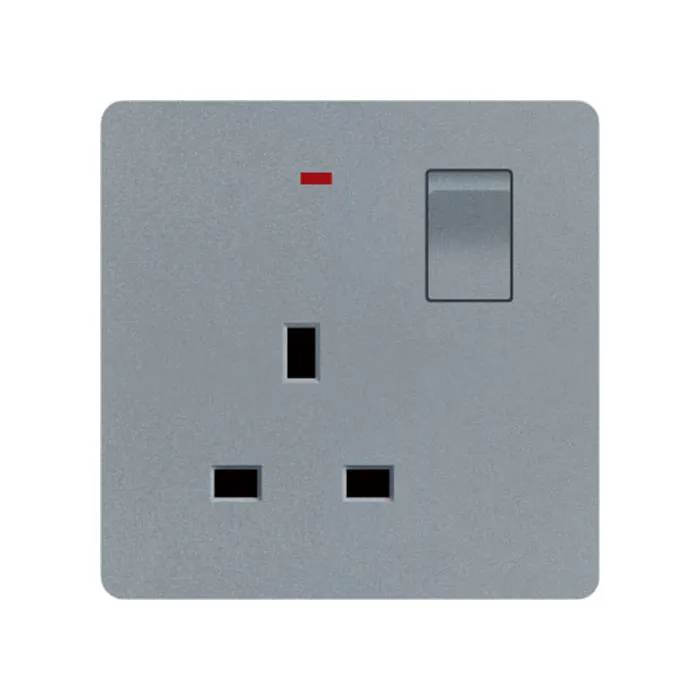
Why are there switches on UK wall sockets?
To understand the purpose of the switch on a UK wall socket, we must begin with the safety philosophy of UK electrical standards. The UK is renowned for its strict electrical regulations and highly safe electrical system, and the socket switch embodies this design philosophy.
The fundamental principles followed by UK electrical standards include:
• Controllable power outlets
• Each circuit unit should have independent power-off capability
• Safe power disconnection without unplugging appliances
• Sockets should not be continuously energized in no-load or standby states
Therefore, the switch on a UK wall socket is a crucial piece of hardware for ensuring electrical safety.
Thus, the socket switch is not an extra decoration or a dispensable design, but a fundamental component of the UK electrical system.
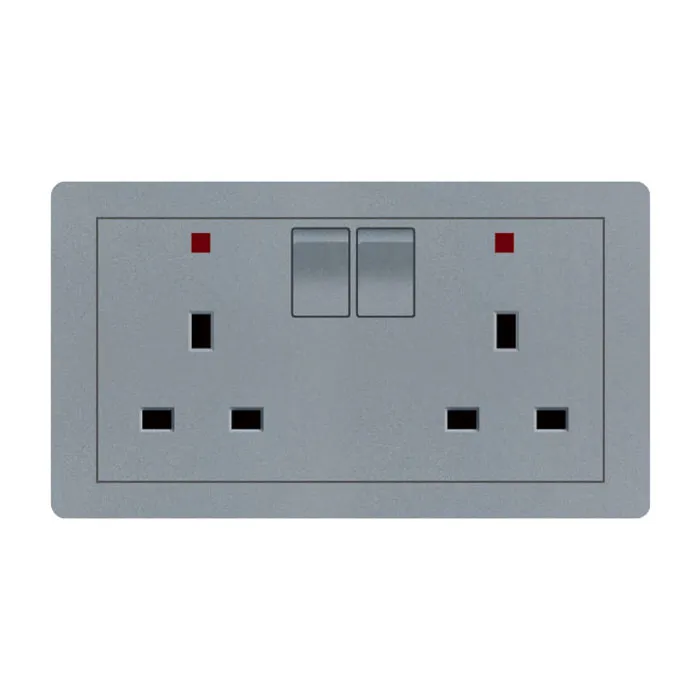
What is the function of the switch on a UK wall socket?
The function of the switch on a UK wall socket mainly focuses on the following aspects:
1. Controlling whether the socket is energized – the core function
When the switch is in the "ON" position, the socket begins to supply power to appliances; when the switch is switched to "OFF," the socket is completely de-energized.
The advantages of this design include:
• Power disconnection without unplugging appliances
• Avoiding standby power consumption of appliances
• Reducing the number of plugging and unplugging cycles, protecting the lifespan of plugs and sockets
The switch in a UK wall socket allows users to control the socket like controlling a light, which is very intuitive and convenient.
2. Reduce the Risk of Electric Shock and Misoperation
The switch on a UK wall socket provides an extra layer of safety. After power is cut off via the switch:
• No current flows into the device even if the plug is still in.
• Safer when cleaning, maintaining appliances, or moving plugs.
• Avoids potential dangers from touching plugs with wet hands.
Especially in damp environments like kitchens, sockets with switches significantly reduce the risk of electric shock.
3. Prevent Overloading
The UK power grid operates at 230V, with high power demands; many appliances operate close to their 13A limit. A switch on the socket allows users to control specific power sources as needed, preventing simultaneous power supply from causing:
• Circuit overload
• Socket overheating
• Circuit breaker tripping
In UK wall sockets, the switch is not only a key safety feature but also helps to properly distribute household electrical loads.
4. Prevent Sparks and Live Wires from Being Activated When Pluged in or Unplugged
On UK wall sockets, the switch controls the live wire. When you turn off the switch:
• The live wire is cut off
• Pluging or unplugging is no longer done while the appliance is conductive
• The risk of sparks from plugging or unplugging is greatly reduced
This is especially important for high-power appliances, as they operate at high voltage and current, and directly unplugging them could cause an arc.
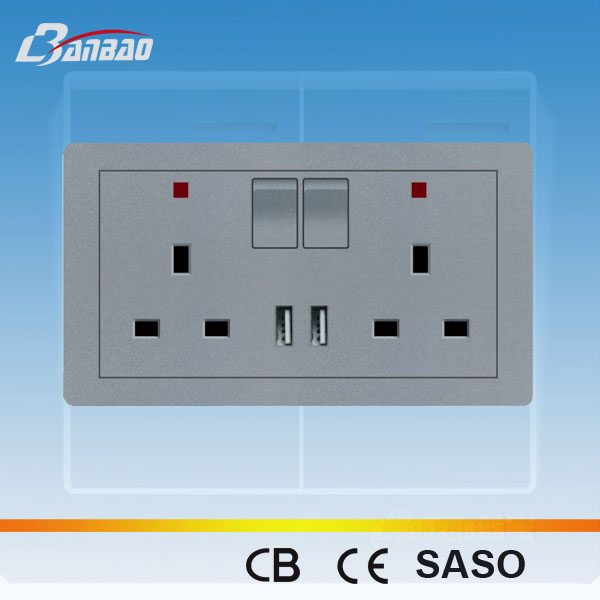
How does the switch on a UK wall socket work?
The switch on a UK wall socket is essentially a small mechanical circuit breaker that controls the socket by controlling the flow of the live wire.
Its operation can be described as follows:
• When the switch is in the OFF position
• The live wire is cut off
• There is no current inside the socket
• The fuse inside the plug is also de-energized
• When the switch is in the ON position
• The live wire, neutral wire, and ground wire are connected
• The socket begins to output 230V voltage
• Plug-in appliances can operate normally
This live wire control method is significantly different from the "permanently energized sockets" used in many countries. UK wall sockets emphasize user controllability.
Why must UK wall sockets use a switch design?
The inclusion of switches in UK wall sockets is not an optional design but a standardized requirement. The UK national standard BS 1363 places a high emphasis on safety, primarily for the following reasons:
1. The UK uses a high-voltage system (230V)
Compared to countries using 100–127V, 230V has a greater impact on people, appliances, and wiring, making power control more essential.
2. UK plugs use fuses
UK electrical plugs have individual fuses. If the socket cannot control the power supply, the likelihood of the fuse blowing due to overload or sudden failure increases. By using UK wall sockets with switches, power can be disconnected when plugged in or not in use, reducing the burden on the plug's fuse.
3. UK safety regulations require greater control over household electricity
UK regulations expect users to:
• Disconnect power without unplugging
• Maintain safe disconnection when the socket is unloaded
• Avoid the heat generated by prolonged energization
Therefore, switches on sockets are considered a basic safety feature.
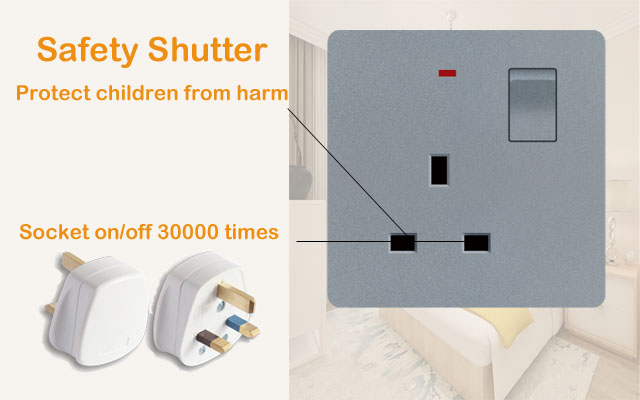
Does the switch on a UK wall socket need to be used daily?
From the design philosophy of the UK electrical system, the primary purpose of switches is to control the on/off state of power. Therefore, many people ask:
Do switches need to be switched on and off frequently? Do they need to be turned off daily?
The answer is:
It is not mandatory to turn them off daily.
However, turning off switches when not in use is recommended.
The reasons are as follows:
• Prevent appliances from consuming power in standby mode.
• Prevent appliances from unknowingly remaining energized.
• Reduce the risk of overheating in the socket.
• Increase electrical safety.
UK wall socket switches are primarily designed for safety; therefore, moderate use can extend the life of the device and improve safety.
What are the common colors and markings on UK wall socket switches?
Switches on UK wall sockets generally have the following characteristics:
• Most have a red neon indicator.
• The switch is often white or the same color as the socket.
• Usually marked "ON / OFF".
A lit red light indicates:
• The switch is on.
• The socket is receiving power.
This visual cues are very intuitive and safe for judging the power status.
What precautions should be taken when using UK wall socket switches?
Using switches on UK wall sockets is very simple, but there are still a few points to note:
1. Do not operate the switch with wet hands: Although the switch casing is insulated, operating it with wet hands poses a potential risk.
2. Turn off the switch before plugging or unplugging: This reduces the risk of sparks and arcs.
3. It is recommended to turn off the switch when not in use: This extends the life of the socket and the appliance.
4. Check the indicator light to confirm the on/off status: This is especially important in kitchen environments.
Can I get a quote or sample before placing a larger order?
Absolutely. Our company encourages prospective buyers and purchasing departments to request samples and formal quotes prior to bulk purchasing. We supply production samples for evaluation, offer trial order prices, and issue clear quotes covering unit prices, discounts for volume purchases, and estimated shipping costs. As a manufacturer, we can also adjust sample specifications to reflect final production variants.
