

In home electricity and lighting control, a dimmer switch is a very common wall control device, primarily used to adjust the brightness of light fixtures.
However, when installing or replacing a fan control switch, a common question arises: Can I use a dimmer switch on a fan?
This question seems simple, but it actually involves several technical aspects, including the working principle of the motor, electrical load characteristics, and switch design logic. A lack of understanding can easily lead to misjudgments during selection and use.
This article will focus on the topic of "Fan Dimmer Wall Switch," systematically and deeply answering this question from the perspectives of dimmer switch principles, fan load characteristics, the definition of a fan dimmer wall switch, and its differences from ordinary dimmer switches.
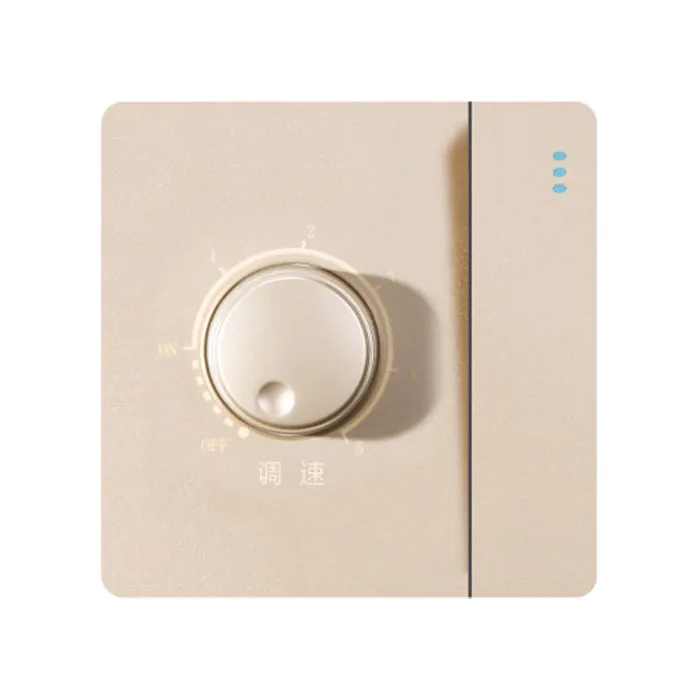
What is a dimmer switch essentially used for?
Before discussing whether a dimmer switch can be used on a fan, a fundamental concept must be clarified: Dimmer switches were originally designed for light fixtures.
The core function of a traditional dimmer switch is:
• To change the effective voltage supplied to the load
• To control the brightness of the light fixture
• Primarily designed for resistive or specific electronic loads
Whether it's a rotary, slider, or push-button dimmer switch, its core function revolves around the goal of "adjusting the brightness of the light source."
What are the differences in electrical characteristics between fans and light fixtures?
This is crucial in determining whether a switch is suitable for use.
From an electrical principle perspective:
1. Light fixtures (especially traditional incandescent bulbs): Primarily resistive loads
2. Fans: Typical motor loads (inductive loads)
During operation, motors involve:
• Starting current
• Speed control
• Magnetic field changes
These characteristics determine the fundamentally different requirements for the control switch between fans and light fixtures.
Can a regular dimmer switch directly control a fan?
From a professional perspective, it is not recommended to use a regular light dimmer switch directly for a fan.
The reason isn't simply a "connection problem," but rather the following:
• Ordinary dimmer switches are not designed for motor loads.
• Dimming is not the same as fan speed control.
• May cause unstable fan operation.
• Prone to noise, vibration, or abnormal overheating.
Therefore, simply understanding "dimming" as "speed control" is a common misconception in fan control.
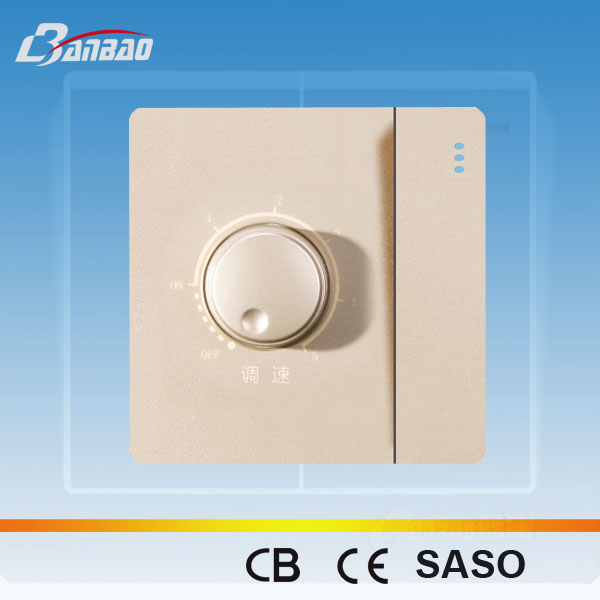
What is a fan dimmer wall switch?
It is against this backdrop that the fan dimmer wall switch, a specialized product, was developed.
By definition, a fan dimmer wall switch is:
• A wall switch specifically designed for fan motor control.
• A device that can adjust fan speed by changing the power supply method.
• A control device adapted to fan load characteristics.
Although the name includes "dimming," the core function of a fan dimmer wall switch is not dimming, but speed control.
What is the difference between a fan dimmer wall switch and an ordinary dimmer switch?
This is one of the core questions for understanding a fan dimmer wall switch.
From a design perspective:
1. Standard dimmer switch: Focuses on adjusting lamp brightness.
2. Fan dimmer wall switch: Focuses on fan speed control.
From an internal design perspective:
• Fan dimmer wall switches prioritize motor start-up and operational stability.
• They can adapt to current variations caused by inductive loads.
• The control logic is smoother, preventing fan "jamming".
Therefore, although they look similar, their internal designs and applicable loads differ.
How does a fan dimmer wall switch control speed?
From a principle perspective, a fan dimmer wall switch achieves speed adjustment through the following methods:
• Changing the effective power received by the fan motor.
• Controlling the motor's magnetic field strength.
• Ensuring stable fan operation across different speed ranges.
Compared to lamp dimming, fan dimmer wall switches emphasize:
• Continuity of speed changes.
• Smooth motor operation.
• Avoiding abnormal noise and vibration.
Why can't lamp dimmer switches be used with fans indiscriminately?
This is a point many users easily overlook.
Using a regular dimmer switch for a fan may cause the following problems:
• The fan fails to start properly
• The fan speed fluctuates wildly
• Significant current noise occurs
• Abnormal temperature rise in the fan motor
Essentially, this is because the dimming logic of the light fixture is incompatible with the operating characteristics of the fan motor.
What are the load parameter requirements for a fan dimmer wall switch?
As a specialized control device, a fan dimmer wall switch also has a defined parameter range.
Generally, you need to pay attention to:
• Whether the rated voltage matches
• Maximum controllable current or power
• Whether it is specifically designed for fan or motor loads
This is why, when selecting a fan dimmer wall switch, you cannot only look at its appearance or operation method, but must judge it from the parameter level.
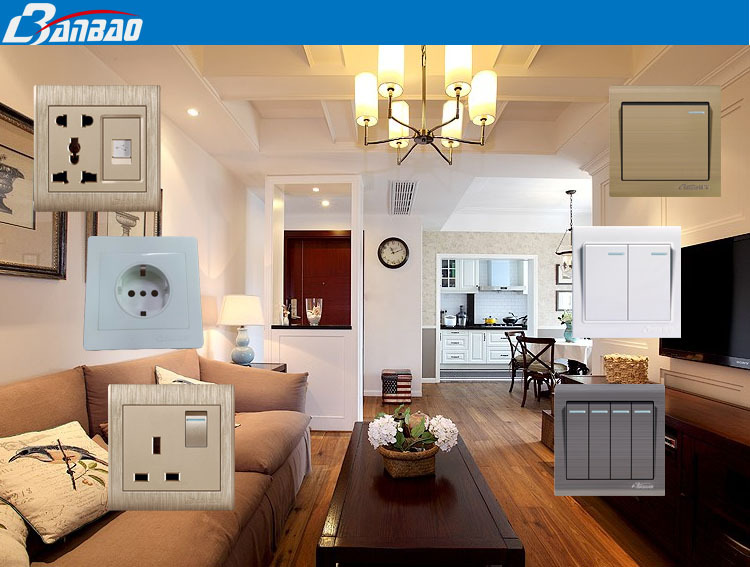
Can a fan dimmer wall switch only be used with fans?
From its original design, a fan dimmer wall switch is designed for fan loads.
Its control logic, internal components, and safety design are all centered around the fan motor. Therefore:
• Suitable for fixed fan equipment such as ceiling fans and exhaust fans.
• Not equivalent to a general-purpose dimmer switch.
This is also an important basis for distinguishing a "Fan Dimmer Wall Switch" from ordinary dimmer products.
What should be noted when using a fan dimmer wall switch?
From a usage logic perspective, understanding the following points is particularly important:
• It is a "speed control switch," not a "light dimmer."
• Must be used with a suitable fan load.
• Different types of dimmer switches should not be mixed.
Correctly understanding the functional positioning of a fan dimmer wall switch helps avoid incorrect selection and misuse.
What is the difference between a fan dimmer wall switch and a regular fan switch?
This is another easily confused concept.
1. Regular fan switch: Usually only has an on/off function.
2. Fan dimmer wall switch: Adds speed adjustment capability to the basic switch functionality.
The difference lies in whether it has continuous or stepped speed adjustment capability, not whether it can control the fan itself.
How to correctly understand the concept of a "Fan Dimmer Wall Switch"?
From a professional perspective:
• Fan Dimmer Wall Switch ≠ Lighting Dimmer Switch
• Fan Dimmer Wall Switch = Fan Speed Control Switch
• "Dimmer" here refers more to functionality than actual dimming in lighting terms.
Understanding this is key to avoiding common electrical misconceptions.
Can I use a dimmer switch on a fan?
• Ordinary light dimmer switches are not suitable for direct use with fans.
• Fans are motor loads and have specific control requirements.
• Fan dimmer wall switches are control devices specifically designed for fans.
• Whether it "can be used" depends on whether it is a dedicated fan dimmer wall switch.
In other words, not all dimmer switches can be used with fans; only true fan dimmer wall switches are suitable for fan control.
What steps do you take to ensure reliable manufacturing deadlines?
Maintaining dependable deadlines starts with disciplined production planning, raw material stocking and skilled workforce management. Our factory’s processes are continuously optimized to avoid bottlenecks, and project orders receive dedicated scheduling. We communicate regularly with buyers to update progress and coordinate shipment timing.
Purchasing teams appreciate our ability to provide accurate delivery estimates in quotes and proforma invoices. By streamlining operations, we keep production efficient, ensuring buyers receive high-quality goods at fair prices with minimized risk of delay.
