


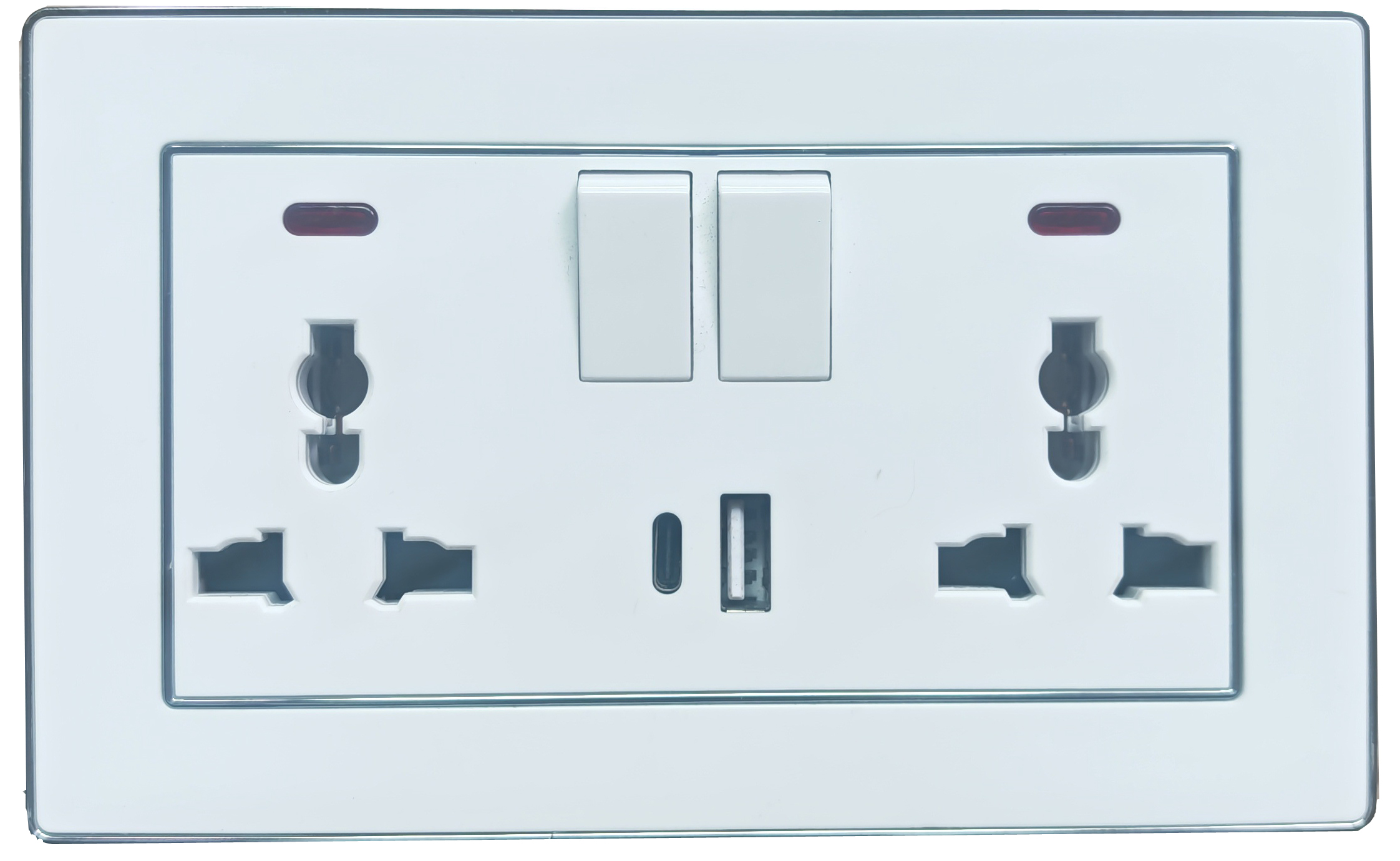
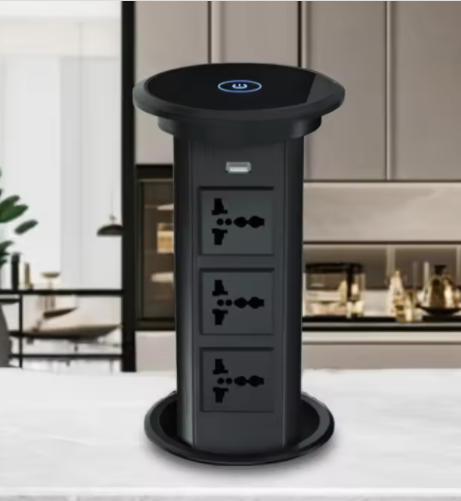
In electrical systems, different types of switches have different rated currents, withstand voltages, and applicable power ratings. Choosing the right wall switch is especially important when controlling high-power equipment. Many consumers, upon seeing a 20A DP wall switch, ask a crucial question:
"How many watts of power can a 20A DP wall switch handle?"
The answer is actually quite clear:
20A × 250V = 5000W (theoretical maximum).
However, in actual use, it's not as simple as "calculating according to the formula." To ensure safety, stability, and lifespan, it's essential to understand factors such as rated current, voltage range, switch structural characteristics, environmental factors, and safety margins.
This article will provide an in-depth analysis of this topic, helping readers fully understand the rated power calculation logic, usage limitations, and related electrical knowledge of 20A DP wall switches, enabling you to professionally determine whether the switch is suitable for specific home or engineering equipment.
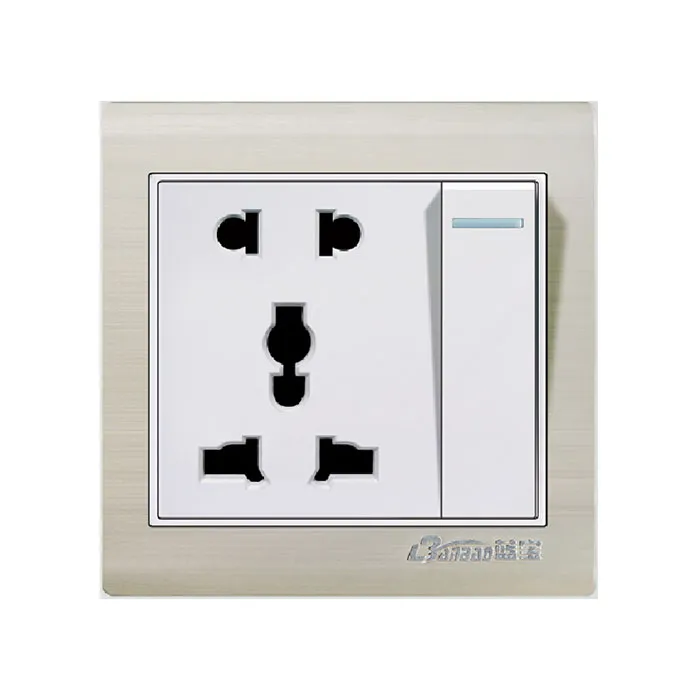
How is the rated power of a 20A DP Wall Switch calculated?
According to the electrical power calculation formula:
P = I × V
Where:
• P = Power (W)
• I = Current (A)
• V = Voltage (V)
Assuming a rated voltage of 250V and a current of 20A, the maximum theoretical power is:
20A × 250V = 5000W
This means that a 20A DP Wall Switch can theoretically withstand a maximum load of 5000W.
Why can't the rated power of a 20A DP Wall Switch be used directly based on its theoretical value?
The rated parameters of electrical equipment represent a "safety upper limit," but are not suitable as actual operating values for long-term operation. Reasons include:
1. Contact resistance heating
The silver alloy or copper contacts inside a 20A DP Wall Switch generate tiny resistance during contact. Even very low resistance can lead to significant heating under high current conditions. This is a crucial factor to consider when choosing electrical switch materials.
2. High-power equipment draws a large starting current
Many high-power devices draw 2-5 times, or even more, the rated current at startup.
Using a switch to withstand near-full load current for extended periods will accelerate contact fatigue.
3. Ambient temperature affects rated current carrying capacity
Standard temperature conditions for measuring rated current are only in laboratory environments. Real-world environments include:
• Enclosed junction boxes
• Increased wall temperature
• Overly dense wiring harnesses
• Areas exposed to direct sunlight
These factors all affect the continuous current carrying capacity of a 20A DP wall switch.
4. Long-term full-load operation affects lifespan
No matter how excellent the switch structure, long-term operation near its maximum rated value will significantly shorten its lifespan.
5. Standards require a safety margin in the load
Electrical codes generally require that the actual load not exceed 70%-80% of the rated current.
Therefore, although the theoretical power rating is 5000W, the actual recommended power is generally around 3500W to 4000W.
What are the differences between a 20A DP Wall Switch and a regular switch?
A 20A DP Wall Switch has the following characteristics:
1. DP = Double Pole (Double Pole Disconnect)
This means the switch can simultaneously disconnect the live and neutral wires, enhancing safety.
2. Rated current of 20A, far exceeding the 10A/16A of ordinary household switches
Ordinary lighting switches cannot handle high-power equipment.
3. Stronger internal contacts and higher temperature resistance
Its materials and design are designed for high-current scenarios.
4. Suitable for electric heating and high-power motor equipment
For example:
• Heating equipment
• Ventilation systems
• High-power kitchen equipment
• Bathroom electrical control modules
These characteristics make it suitable for handling higher power loads.
Can a 20A DP wall switch be used for all 5000W devices?
The answer is: not necessarily.
The reasons are as follows:
1. Even devices with the same power rating have different characteristics
For example:
• Resistive loads (such as heaters) have stable power.
• Motor loads (such as fans) have high starting current.
• Inductive loads (such as some drives) have inrush current.
Therefore, you cannot simply judge based on power rating.
2. Some devices require independent isolation or special switches
Some devices require:
• Locking switches
• Circuit breakers
• Fuse protection
• Isolating switches with indicator lights
This may be beyond the functional scope of a standard 20A DP wall switch.
3. The wire cross-sectional area must meet the 20A standard
Insufficient wire cross-sectional area can lead to overheating and even danger.
Is the power calculation of a 20A DP wall switch related to voltage?
Will the power calculation change if the voltage is not equal to 250V?
Yes.
Because power is the product of current and voltage:
P = I × V
Rated voltage may vary in different countries and regions:
• 230V
• 220V
• 240V
• 120V
Taking a 120V country as an example, the power would be:
20A × 120V = 2400W
This is far lower than the 5000W in a 230-250V system.
Therefore, the maximum power of a 20A DP Wall Switch varies significantly across different voltage systems.
What is the recommended power for a 20A DP Wall Switch in actual use?
To ensure lifespan and safety, the industry generally adopts the following empirical values:
Recommended maximum continuous load ≈ Rated power × 70%-80%
Calculated using 250V:
• Theoretical value: 5000W
• Recommended continuous operating value: 3500W-4000W
This is the practical standard for most electrical engineering and home improvement projects.
Will the current-carrying capacity of a 20A DP wall switch be affected by the installation method?
Yes, the following factors will reduce the current-carrying capacity:
1. Narrow junction box/crowded with cables
This leads to poor heat dissipation.
2. Multiple high-current switches installed side-by-side
This makes it easier for the temperature to rise, affecting the rated current.
3. Installation in high-temperature areas
Such as kitchens or enclosed spaces.
4. Poor contact between cables and terminals
This can lead to abnormally high local temperatures.
Therefore, understanding the rated power is only the foundation; environmental factors are the truly important variables that determine the current-carrying capacity.
What are the different requirements for a 20A DP wall switch depending on the type of load?
Different load types have very different effects on the switch:
1. Resistive loads (most stable)
For example:
• Heating rods
• Electric heating equipment
• Purely resistive heaters
These devices have small current fluctuations and are most compatible with 20A DP wall switches.
2. Motor Loads (High Starting Current)
Examples:
• Fans
• Small Electrical Equipment
The starting current can reach several times the rated value.
3. Inductive Loads (Large Arc, Strong Impact)
Examples:
• Some Drivers
• Certain Power Supply Equipment More prone to contact wear.
Therefore, even with the same power rating, different equipment types have completely different requirements for switches.
Why is the DP (Double Pole) structure more suitable for high-power equipment?
The DP (Double Pole) structure has the following advantages:
1. Simultaneously disconnects the live and neutral wires. Ensuring complete power disconnection for enhanced safety.
2. Reduces the risk of a live neutral circuit.
3. More effective safety isolation.
4. Greater peace of mind during maintenance and repair.
How many watts can a 20A DP wall switch actually handle?
Through a detailed professional analysis, we can draw the following precise conclusions:
Theoretical Maximum Power:
20A × 250V = 5000W
Recommended Continuous Power:
Approximately 3500W~4000W
Safety factors include:
• Load type
• Ambient temperature
• Installation conditions
• Cable specifications
• Starting current
• Heat dissipation capacity
Therefore, a 20A DP wall switch is a reliable choice for high-power devices, but its actual power handling capacity needs to be appropriately reduced according to professional principles to improve safety and lifespan.
