

Fans are one of the most common ventilation devices in homes, offices, and commercial spaces. They are simple to operate, energy-efficient, and durable. However, to make fan operation more comfortable, simply turning them on and off is not enough; the speed needs to be adjusted according to ambient temperature, airflow demand, and human comfort.
This is where a control device specifically designed for fans becomes particularly important—the fan speed control wall switch.
So, what is a fan speed control wall switch? How does it differ from a regular wall switch? Why do fans need to be controlled by a special speed control switch? What is the speed control principle? What are the differences between different types of fan speed control wall switches? These questions will be answered systematically and professionally in this article.
What is the basic definition of a fan speed control wall switch?
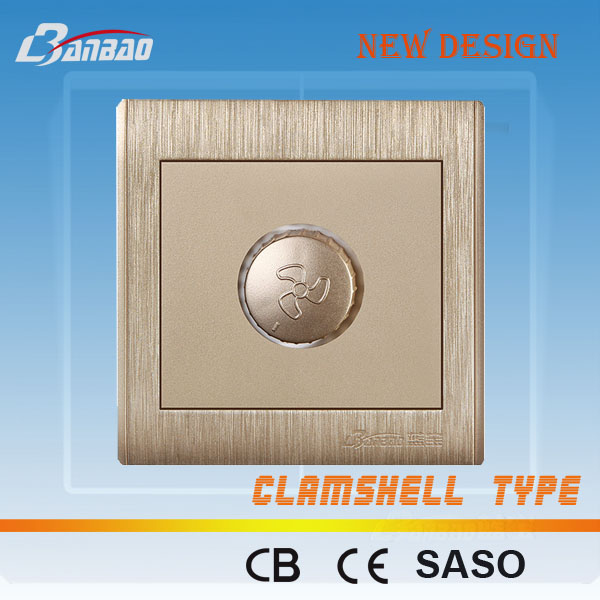
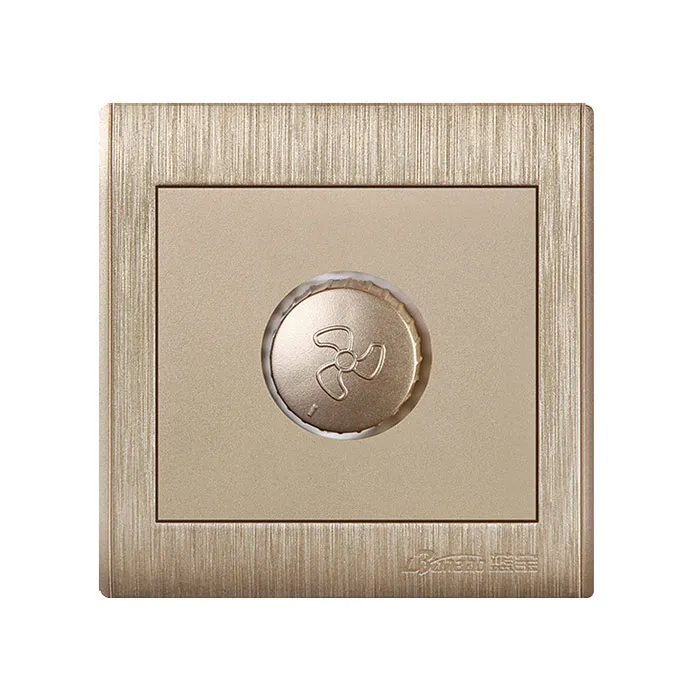
A fan speed control wall switch is a specialized switching device used to change the speed of a fan. It is installed on the wall and adjusts the fan's power supply voltage, phase, or frequency to regulate the fan speed, thereby controlling the fan's rotation speed and allowing users to obtain different levels of airflow.
In simple terms:
A fan speed control wall switch = a wall-mounted control device that controls fan speed.
Unlike ordinary wall switches that only provide an "on/off" function, a fan speed control wall switch can not only control whether the fan starts, but also adjust its operating speed.
Why not use an ordinary switch instead of a fan speed control wall switch?
Ordinary wall switches only disconnect and connect the circuit; they cannot control the fan speed. Fans, unlike light fixtures, don't simply turn on or off; they need to provide different airflow volumes based on airflow requirements.
If only an ordinary wall switch is used, the fan will only have two states:
• Full speed operation
• Completely off
This not only fails to meet comfort requirements, but also may lead to accelerated fan wear due to prolonged operation at maximum speed. Therefore, a fan speed control wall switch is a more reasonable, safer, and more stable choice.
How does a fan speed control wall switch work?
To understand a fan speed control wall switch, you must understand the technical principles behind its fan speed adjustment.
Fan speed control wall switches change fan speed in the following ways:
• Reducing voltage
• Changing the current phase angle
• Adjusting the effective output power
• Changing the operating magnetic field strength of the coil
Different types of fan speed control wall switches use different technologies to regulate speed, but the core objective remains the same:
Changing fan speed by altering the input electrical energy.
The principles of different speed control methods will be explained in more detail below.
What types of fan speed control wall switches are there?
This is a crucial part of determining whether a fan speed control wall switch is suitable. Based on different technical structures and speed control methods, fan speed control wall switches are mainly divided into three categories:
1. Impedance-type speed control switch
2. Capacitor-type speed control switch
3. Electronic (SCR) speed control switch
These will be introduced one by one below.
What are the characteristics of an impedance-type fan speed control wall switch?
Impedance-type speed control switches change the current passing through the fan by switching different impedance values, thereby adjusting the fan speed in stages.
Key Features:
• Fixed speed settings (usually 3 or 5)
• Higher impedance results in lower fan speed
• Simple structure and high reliability
• Suitable for most traditional ceiling fans or wall fans
While impedance-type speed controllers are simple, they offer stable speed control, making them suitable for scenarios requiring speed-controlled fan speeds.

How to adjust the speed of a capacitor-type fan speed control wall switch?
Capacitor-type speed control switches control fan speed by changing the value of the series capacitor.
Key Features:
• Smooth speed adjustment with minimal noise
• Higher capacitance results in higher output current and faster fan speed
• Commonly used in ceiling fans, wall fans, and other household fans
• Low power consumption and precise control
Many traditional rotary fan speed control switches in homes use a capacitor-type structure.
Why are electronic (Triac) fan speed control wall switches more sensitive?
Electronic fan speed control wall switches use Triac technology, adjusting the output voltage by controlling the phase angle of the current.
Features:
• Continuously adjustable speed (no speed limit)
• Wider speed range
• Precise wind speed control
• Compact design
• Sensitive and fast speed adjustment
Due to the use of electronic components for adjustment, it has strong control capabilities and higher precision in wind speed regulation.
What types of fans are suitable for fan speed control wall switches?
Different fans have different requirements for speed control methods, and fan speed control wall switches have a wide range of applications.
Can fan speed control wall switches be used with ceiling fans?
Ceiling fans are the most typical and most commonly used type of fan with fan speed control wall switches.
Reasons include:
• Ceiling fans have a fixed location and require wall control
• Wider speed range, requiring frequent adjustments
• Most ceiling fans are designed to be used with a speed controller
• Wall speed control is convenient for the whole family
Therefore, ceiling fans and fan speed control wall switches are the most common combination.
Can fan speed control wall switches control wall fans?
Yes. Wall fans are typically mounted on a side wall, making it inconvenient to use the speed control buttons on the fan itself. Therefore, installing a wall-mounted speed control switch is a more practical solution.
Does a fan speed control wall switch match an exhaust fan?
Some exhaust fans support speed control, while others do not.
Generally:
• Exhaust fans with motor winding speed control → Can use a fan speed control wall switch
• Electronic circuit exhaust fans → Speed controllers are not recommended
However, in general, most traditional exhaust fans can be used with fan speed control wall switches.
Can a fan speed control wall switch be used with a ceiling-mounted fan light?
A fan light consists of two circuits:
• Fan motor
• Lighting circuit
The fan motor can be controlled by a fan speed control wall switch, but the lighting fixture needs to use a regular wall switch or a separate control line. The functions of the two cannot be used interchangeably.
What are the structural components of a fan speed control wall switch?
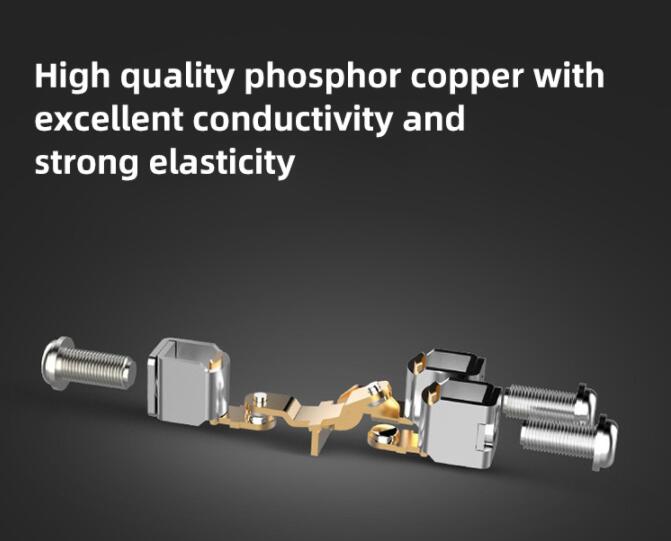
While the appearance of fan speed control wall switches varies slightly between brands, their structures are generally similar, including:
• Control knob or button
• Resistor/capacitor/SCR element
• Input/output terminals
• High flame-retardant plastic housing
• Panel (usually designed uniformly with the switch and socket series)
A more rational structure results in better heat dissipation and more stable speed control.
How are the speed control settings of fan speed control wall switches designed?
In practical applications, the speed control settings of fan speed control wall switches mainly include:
• Three-speed control: Low, Medium, High
• Five-speed control: More granular fan speed control
• Stepless speed control: SCR structure, achieving continuous speed adjustment
The more settings, the more precise the fan speed control.
What is the rated current of a fan speed control wall switch?
Most fan speed control wall switches have a rated current range of:
2A – 6A
Why is this?
Because fans typically have low power ratings:
• Ceiling fans are typically 50W–90W
• Wall fans and table fans are typically 40W–75W
Even at maximum power, their operating current generally does not exceed 1A.
However, speed controllers need to consider safety margins, so their rated current is usually set at a higher 2A–6A.
Is a fan speed control wall switch suitable for mixed control with LED lighting fixtures?
The answer is: No.
Reasons include:
• LED driver circuits cannot be dimmed via speed control
• SCR speed control may cause flickering or damage
• Fan loads and lighting loads cannot be mixed.
Therefore, fan speed control wall switches are only suitable for controlling the fan itself.
What is the wiring method for a fan speed control wall switch?
Fan speed control wall switches typically use the following wiring method:
• Connect the live wire to the switch input terminal.
• Connect the output terminal to the fan's live wire.
• Connect the neutral and ground wires directly to the fan, bypassing the speed control switch.
This wiring method ensures that the fan speed control wall switch only controls the live wire, achieving safe control.
What are the advantages of fan speed control wall switches?
In summary, using a fan speed control wall switch offers the following advantages:
1. Convenient operation: Speed can be controlled without being near the fan.
2. Freely adjustable fan speed: Flexible selection is available for both low and high wind speeds.
3. Support for different speed control technologies: Meets the characteristics of different fans.
4. More in line with home usage habits: Wall control is more convenient than operating the fan itself.
5. Reduced mechanical wear: Prevents the fan from running at high speed for extended periods.
How does your company maintain competitive prices while ensuring quality?
Our pricing advantage stems from efficient factory operations, controlled sourcing, and continuous production optimization. Being a Foshan-based manufacturer gives us access to strong supply networks, allowing us to buy raw materials at low prices without compromising safety standards.
As a supplier, we can offer discounts for repeat purchasing, wholesale bundles, and project-based quotes. Buyers can choose between cost-effective standard lines or premium branded series depending on budget and design expectations.
