

In ventilation systems, residential ceiling fans, and some commercial fan controls, fan speed control wall switches play a crucial role. Many users focus on a key question when choosing a speed control device:
"What is the power rating of a fan speed control wall switch?"
From the perspective of product design, electrical parameters, and load matching, the common operating power range of fan speed control wall switches is typically:
👉 Minimum power approximately 75W
👉 Maximum power approximately 500W
This power range is not arbitrary but closely related to the internal components of the fan speed controller, its electrical control method, heat dissipation capacity, and the fan load it is compatible with.
To help users choose the appropriate fan speed control wall switch more scientifically, this article will provide a professional explanation from multiple dimensions, including electrical principles, rated power, and minimum power limitations.
What is a fan speed control wall switch?
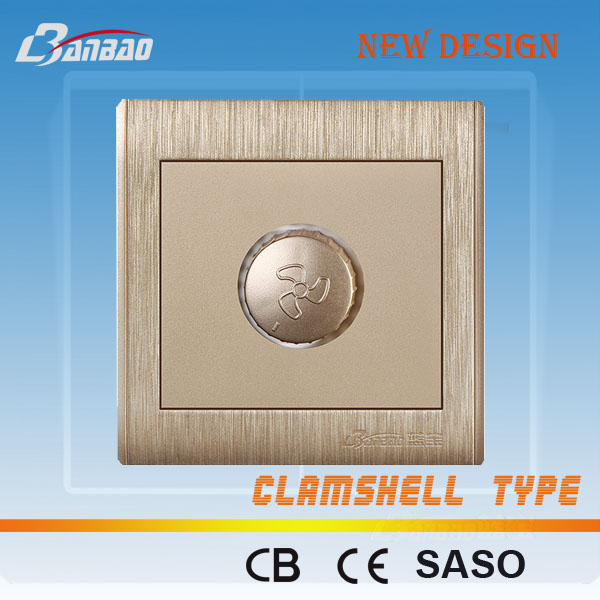
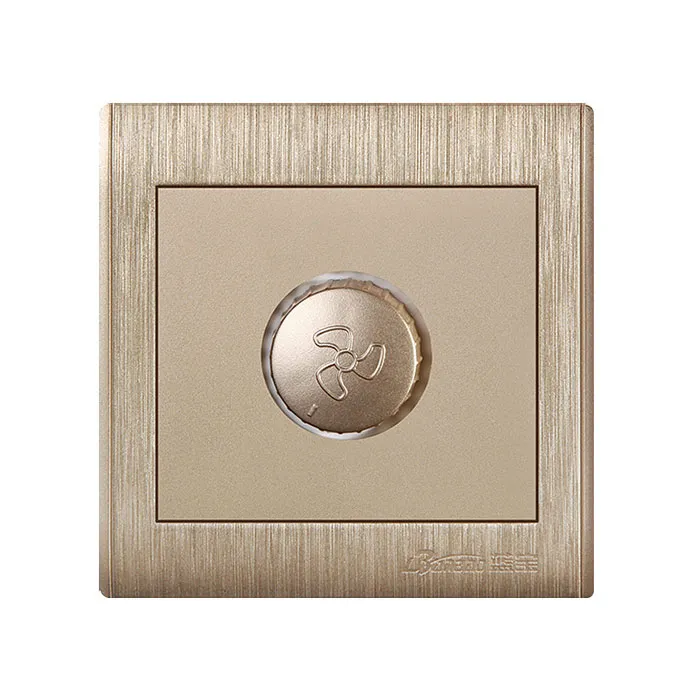
To understand why there is a power limit of 75W to 500W, it is first necessary to clarify: A fan speed control wall switch is a regulator used to control the speed of an AC fan.
It primarily achieves speed control through the following methods:
1. SCR/Triac Voltage Regulation
• Adjusting the voltage waveform
• Changing the effective power
• Therefore, controlling the fan speed
This is the most common speed control method for household and commercial fans.
2. Capacitor-Based Speed Control
• Decreasing or increasing voltage and current by switching capacitor values
• Achieving stepped speed control
Suitable for most ceiling fans and some shaded-pole fans.
3. Intelligent Electronic Speed Control
• Automatically adjusting current through an electronic module
• Power and load range are generally more stable
Regardless of the operating method, there are clear minimum and maximum power limits, which is the core of this article.
Why is the power range of a fan speed control wall switch 75W–500W?
The power range of a fan speed control wall switch is determined by the following factors:
1. What is the reason for the minimum power of 75W?
The reason why the minimum power cannot be too low is:
① Low power load leads to unstable voltage regulation
SCR speed control needs to operate within a certain current range. If the fan power is too low:
• Insufficient current
• The thyristor cannot conduct properly
• This will cause shaking, stuttering, and humming.
② The circuit has difficulty entering the normal operating range
Low-power fans have insufficient torque at startup, resulting in:
• Inability to rotate smoothly
• Possible shutdown
• Potentially increased noise.
Therefore, the industry generally stipulates a minimum of 75W as the benchmark for stable operation.
2. What is the reason for the maximum power of 500W?
The load-bearing capacity of the speed control switch is limited by the following:
① Current-carrying capacity of internal components
Including:
• Thyristor
• Capacitor
• Voltage regulation module
• Wire contact points
Exceeding the design power will lead to severe heat generation.
② Heat dissipation limitations
Fan speed control wall switches are usually installed in wall boxes, whose heat dissipation conditions are not as good as external speed controllers, therefore the rated power is limited.
③ Fan Load Characteristics
Fans have a large starting current, typically 2–3 times the rated current.
Therefore, a 500W rating includes sufficient starting margin.
How is the power rating of a fan speed control wall switch calculated?
The answer is: Yes.
The maximum power of a fan speed control wall switch is usually based on the rated voltage:
Example:
• 220V–250V areas: Power limit approximately 500W
• 120V areas: Maximum power will decrease significantly
Therefore, the power formula remains:
P = U × I
The higher the power, the higher the current the switch needs to handle, and the stronger the heat dissipation requirements.
Why must a fan speed control wall switch be matched to the fan power?
The main reasons are as follows:
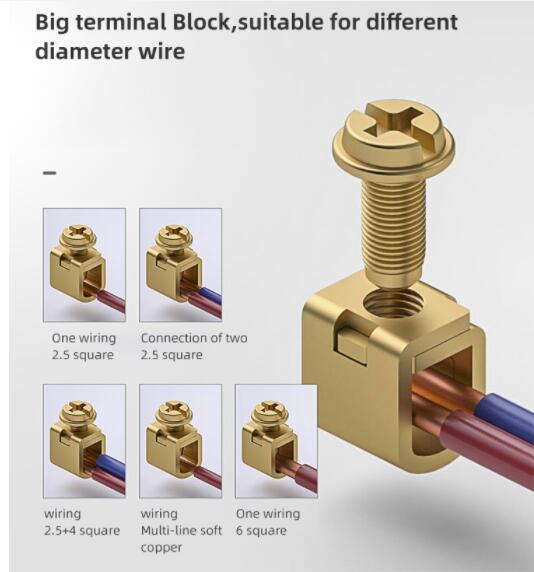
1. Exceeding the maximum power will burn out the speed controller
If the fan power exceeds 500W, it will lead to:
• Component overheating
• SCR failure
• Overheating of wires
• Increased fire risk
Therefore, the maximum power must be strictly adhered to. 2. A power rating below 75W will cause speed control failure.
If the fan power is too low:
• Vibration during speed adjustment
• Inability to operate at low speeds
• Motor overheating
• Inability to start.
Therefore, the speed controller must be matched to the fan.
Do different fan types have different requirements for the speed controller?
Yes, the fan type affects the speed control effect.
1. AC ceiling fan (most common)
• Compatible with 75W–120W motors
• Capacitor-based speed control works best
• SCR speed control can also be used.
2. Exhaust fan, ventilation fan
• Power is generally 25–45W, but some models do not support speed control.
• Some low-power fans are not suitable for SCR speed control.
Therefore, not all fans are suitable for using a fan speed control wall switch.
3. Commercial High-Power Fans
• Power may reach 300–500W
• High start-up shock
• Requires a high-power speed controller
4. Industrial Fans
• Power exceeds 500W
• Not suitable for wall-mounted speed switches
• Typically use inverters or power regulators
Does the power rating of a fan speed control wall switch affect the speed settings?
What differences will occur when using the same speed controller with fans of different power ratings?
The following situations may occur:
1. High-Power Fans
• High torque even at low speeds
• Slower speed changes
2. Low-Power Fans
• May stop completely at low speeds
• Prone to low-frequency humming noise
• Unstable operation
Therefore, the fan power must be matched with the speed control switch.
What is the impact of the rated current of a fan speed control wall switch?
If a fan speed control switch is labeled with:
• Rated Voltage: 250V
• Rated Current: 2A
Then the maximum power is:
P = 250V × 2A = 500W
This matches the industry standard of 500W.
The minimum power of 75W is usually related to the stability of the voltage regulating component.
Why are fan speed control wall switches unsuitable for ultra-low power fans?
What happens if the fan power is below 75W?
Generally, the following will occur:
• No rotation at low speed
• Unstable fan speed
• Humming noise
• Increased temperature
• Difficulty starting
The reason is that low-power fans cannot allow the speed controller to operate within its normal operating range.
Is the power of a fan speed control wall switch affected by the installation environment?
Yes.
Factors include:
1. Insufficient heat dissipation due to an undersized junction box
2. Reduced rated power in high-temperature environments
3. Increased temperature due to multiple switches arranged side-by-side
4. Overly thin wiring causing heat generation
Therefore, even a speed controller rated at 500W should not be used close to its limit in harsh environments.
What is the core business focus of Zhongmei Lighting Electric Appliance Co., Ltd?
Zhongmei Lighting Electric Appliance Co., Ltd operates as a professional manufacturer and supplier specializing in contemporary lighting electrical appliances. Our main focus includes stylish wall switches, premium socket systems, and supporting accessories that respond to modern home and commercial needs. Buyers looking to purchase reliable, high-quality electrical fittings will find our factory-direct prices, discount offers, and wholesale purchasing options extremely competitive.
