


In traditional home electrical systems, wall switches have a very simple function—controlling the on/off state of circuits. However, with the increasing functional demands of home electrical systems, a new type of switch incorporating network communication capabilities has gradually entered the public eye: the Wi-Fi Wall Switch.
Many people, when first encountering this concept, have similar questions: What exactly is a Wi-Fi Wall Switch? What are the fundamental differences between it and a regular wall switch? How does it work?
This article will provide a systematic and in-depth analysis of the Wi-Fi Wall Switch, helping you truly understand the core attributes of this product.
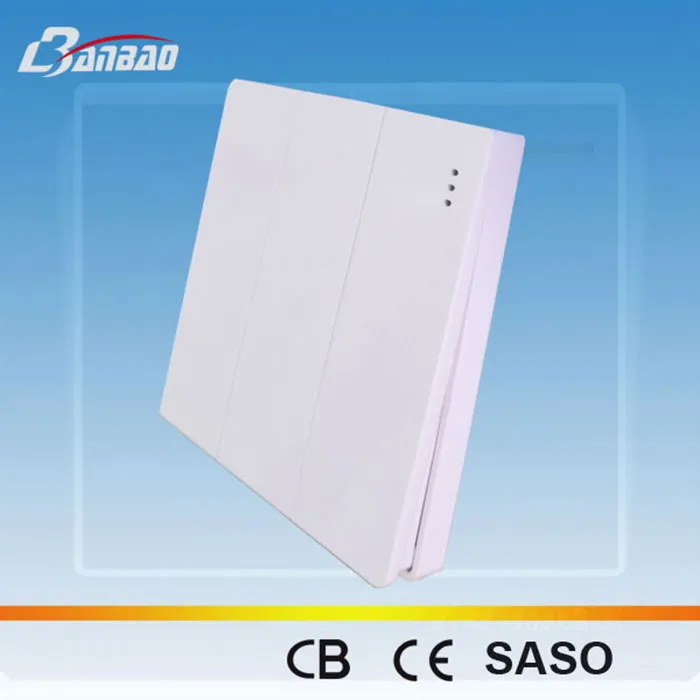
What is the basic definition of a Wi-Fi Wall Switch?
Strictly speaking, a Wi-Fi Wall Switch is an electrical control device that integrates a wireless network communication module into a traditional wall switch.
It possesses the following core features:
• On/off control functions like a conventional wall switch
• Integrated Wi-Fi communication module
• Remote control via LAN or the internet
• Requires continuous power to maintain communication functionality
Essentially, a Wi-Fi Wall Switch is not simply a "button with network functionality," but an electrical control terminal with network connectivity.
What are the differences between a Wi-Fi Wall Switch and a regular wall switch?
To truly understand a Wi-Fi Wall Switch, it's essential to compare it with a traditional wall switch.
From a functional perspective:
• Regular wall switch: Only allows local physical control
• Wi-Fi Wall Switch: Supports both local and network control
From an electrical structure perspective:
• Regular wall switches are primarily mechanical or have simple electronic structures
• Wi-Fi Wall Switches contain a control chip, power module, and communication module.
Because of this, the design and usage logic of a Wi-Fi Wall Switch differ significantly from that of a regular wall switch.
How does a Wi-Fi Wall Switch work?
This is one of the most frequently asked questions.
From a working principle perspective, a Wi-Fi Wall Switch primarily operates through the coordinated efforts of the following systems:
1. Power System: Provides continuous power to the internal electronic modules.
2. Control Unit: Receives and parses control commands.
3. Wi-Fi Communication Module: Connects to the home wireless network.
4. Actuator: Controls the on/off state of the circuit.
When the Wi-Fi Wall Switch receives a command from a local button or network terminal, the control unit activates an internal relay or electronic switch to control the load circuit.
Why does a Wi-Fi Wall Switch require continuous power?
This is a crucial question for understanding Wi-Fi Wall Switches.
Unlike ordinary wall switches, Wi-Fi Wall Switches contain continuously operating electronic systems, including:
• Wireless communication module
• Control chip
• Status monitoring circuit
These components all require a stable power supply; therefore, the Wi-Fi Wall Switch remains powered even when the load circuit is disconnected.
This is why Wi-Fi Wall Switches are typically more complex in terms of wiring and circuit design than traditional wall switches.
What structures are typically included inside a Wi-Fi Wall Switch?
Structurally, a Wi-Fi Wall Switch is not simply a mechanical product, but a small electronic system.
Common internal components include:
• Input power module
• Low-voltage regulator circuit
• Control chip
• Wi-Fi communication module
• Relay or electronic switch
• Physical button assembly
These components together constitute the complete functional system of a Wi-Fi Wall Switch, enabling it to perform both electrical control and network communication.
What are the network environment requirements for a Wi-Fi Wall Switch?
Since a Wi-Fi Wall Switch relies on a wireless network for communication, its normal operation is closely related to the network environment.
From a principle perspective, a Wi-Fi Wall Switch typically:
• Connects to a wireless LAN in the home or office
• Establishes communication with a control terminal via the network
• Relies on stable Wi-Fi signal coverage
It is important to emphasize that the network function of a Wi-Fi Wall Switch does not change its fundamental attribute as a wall switch; rather, it adds a control channel.
Does a Wi-Fi Wall Switch still support manual operation?
This is a question that many users easily overlook when understanding Wi-Fi Wall Switches.
From a design perspective, Wi-Fi Wall Switches retain local physical operation capabilities. This means:
• Even without a network connection
• Even without remote control
• Circuit switching can still be controlled via panel buttons
This is one of the key differences between Wi-Fi Wall Switches and purely network-based control modules.
What does a Wi-Fi Wall Switch control?
From an electrical function perspective, the core task of a Wi-Fi Wall Switch remains controlling the load circuit.
Regardless of the control method, its controlled objects essentially include:
• Lighting circuits
• Power circuits
• Power supply circuits for fixed electrical equipment
Therefore, Wi-Fi Wall Switches still need to comply with the basic electrical specifications for wall switches in terms of rated voltage and current parameters.
What safety considerations are there in the design of Wi-Fi Wall Switches?
Since Wi-Fi Wall Switches are electronic products that are constantly powered, their safety design is particularly important.
From a professional perspective, Wi-Fi wall switches typically need to consider:
• Electrical isolation and insulation performance
• Heat resistance of internal electronic components
• Stability during long-term operation
• Reliability of control and execution components
These design considerations determine the safety boundaries of a Wi-Fi wall switch in everyday use.
Are Wi-Fi wall switches and smart wall switches the same concept?
Conceptually, the two are often used interchangeably, but they are not entirely equivalent.
From a definitional perspective:
• Wi-Fi Wall Switch: Emphasizes Wi-Fi communication method
• Smart Wall Switch: Emphasizes intelligent control attributes
In other words, a Wi-Fi wall switch is a specific implementation of a smart wall switch, but not all smart wall switches must use Wi-Fi communication.
Does using a Wi-Fi wall switch require changing the original power supply logic?
From a system perspective, a Wi-Fi wall switch does not change the basic logic of the circuit.
Its core features are:
• Upgraded control method
• Unchanged electrical essence
• Circuit still follows traditional electricity usage rules
Therefore, when understanding a Wi-Fi Wall Switch, it should be viewed as a functional extension of a traditional wall switch, rather than a complete overhaul of the electrical system.
How can long-term partners benefit from working with Zhongmei?
Long-term partners enjoy multiple advantages such as stable supply, priority production slots, exclusive discounts, customized product development, favorable payment terms, and early access to new models. As a factory-direct supplier, we aim to establish lasting cooperation that helps partners grow their brands and expand their distribution networks. Buyers also benefit from consistent high-quality manufacturing, flexible quotes, and responsive after-sales service, strengthening their competitiveness in the lighting and electrical markets.
