

Wall switches are crucial components in home renovation and electrical installation. Whether it's living room lighting, bedroom lights, kitchen exhaust fans, or water heater power, everything relies on the control capabilities of a wall switch. However, many people encounter two common specifications when purchasing wall switches: 10A and 16A.
This leads to a key question: What exactly is the difference between a 10A and 16A wall switch for home use? Which one should you choose?
This essentially involves current, appliance power, load capacity, safety level, application scenarios, and national electrical standards. To make the right decision, a professional electrical analysis of the performance differences between 10A and 16A wall switches is necessary.
This article will systematically analyze the differences between the two types of wall switches to help you make the right choice during renovation.
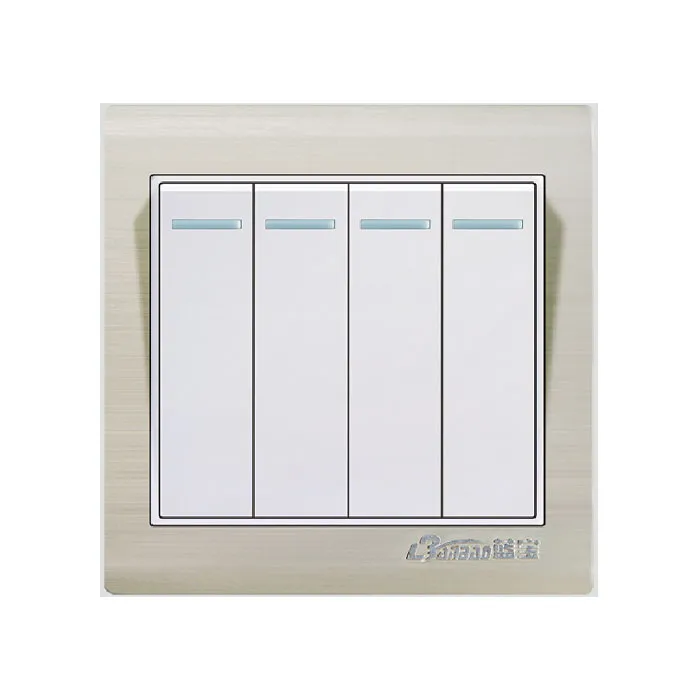
Why are there 10A and 16A wall switches?
When choosing a wall switch, most consumers immediately look at the rated current, such as:
• 10A wall switch
• 16A wall switch
This represents the maximum rated current the wall switch can safely handle.
Current capacity determines the load the switch can handle.
Generally speaking:
• 10A wall switches are used for general lighting loads.
• 16A wall switches are used for some high-power appliances or high-load lighting equipment.
The higher the current rating, the more robust and heat-resistant the internal contacts, wire terminals, copper plates, and other components of the switch should be.
Therefore, the wall switch specification must be selected based on the power of the appliance and the actual current requirements.
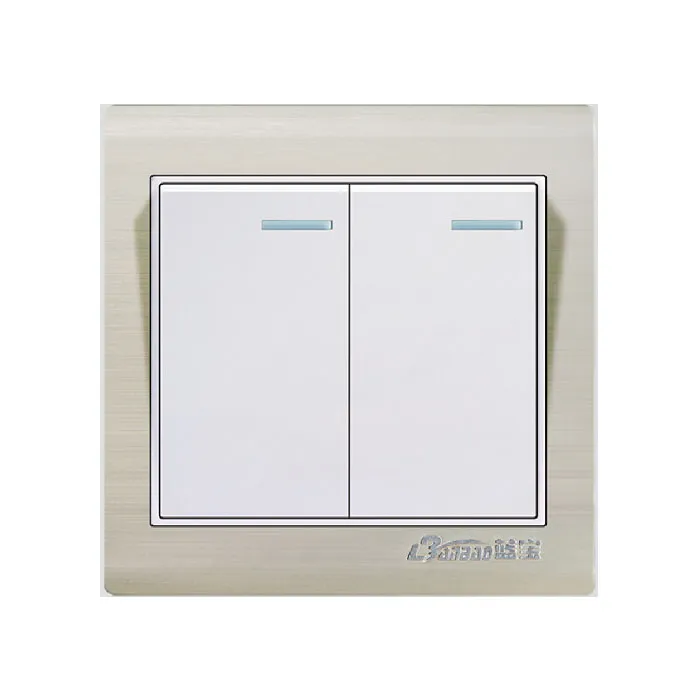
What are the characteristics of a 10A wall switch?
A 10A wall switch is the most common specification in home decoration; almost all general lighting scenarios use 10A.
10A switches are primarily suitable for:
• LED pendant lights
• Ceiling lights
• Wall lamps and table lamps
• General lighting circuits
• Low-power exhaust fans
• Low-power small devices
Because the current drawn by these devices is typically far below 10A, using a 10A wall switch ensures normal operation and safety.
Advantages of 10A wall switches
1. Suitable for most lighting needs
Whether in a new house or a renovation of an old house, the power of general lighting is relatively low, and a 10A switch is sufficient.
2. High cost-effectiveness
Low cost, high market penetration, many styles, and a wide range of choices.
3. Easier installation
Relatively simple structure, easier installation and debugging.
4. Meets the requirements of most home circuits
In lighting circuits, 10A fully complies with national standards.
Applicable Power of a 10A Wall Switch
At 220V, the maximum safe power of a 10A wall switch is approximately: P = U × I = 220V × 10A ≈ 2200W.
Therefore, the power of an appliance controlled by a single 10A wall switch should not exceed approximately 2000W.
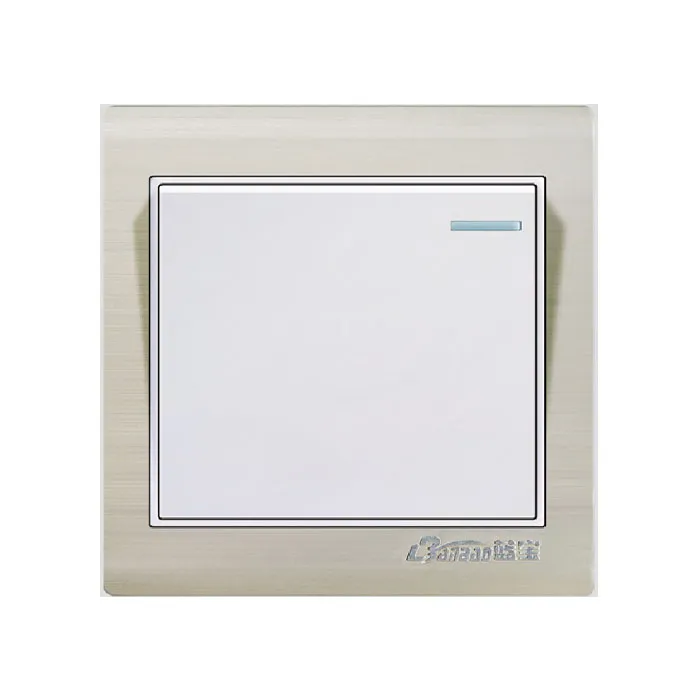
What are the characteristics of a 16A wall switch?
A 16A wall switch is designed for higher loads than ordinary lighting, with higher electrical safety requirements.
A 16A switch is suitable for:
• Kitchen exhaust fans
• Water heaters (low power)
• Bathroom heater lighting or ventilation systems
• High-power ceiling lights
• Small wall-mounted air conditioners (depending on power)
Typically used in circuits with high current demands.
Advantages of a 16A Wall Switch
1. Stronger High Current Capacity
Thicker internal copper sheets, stronger contacts, and higher heat resistance.
2. Suitable for High-Power Equipment
A 16A wall switch provides a larger safety margin in necessary scenarios.
3. Lower Heat Generation
The high-current design generates less heat under the same load, extending its lifespan.
4. Meets the Needs of High-Load Lighting Systems
Large crystal chandeliers and other high-power lighting equipment are better suited for control using a 16A wall switch.
Applicable Power of a 16A Wall Switch
The maximum power of a 16A wall switch at 220V is approximately: 220V × 16A = 3520W.
Therefore:
A 16A wall switch can safely handle equipment with a power consumption of approximately 3500W.
Suitable for high-load power applications.
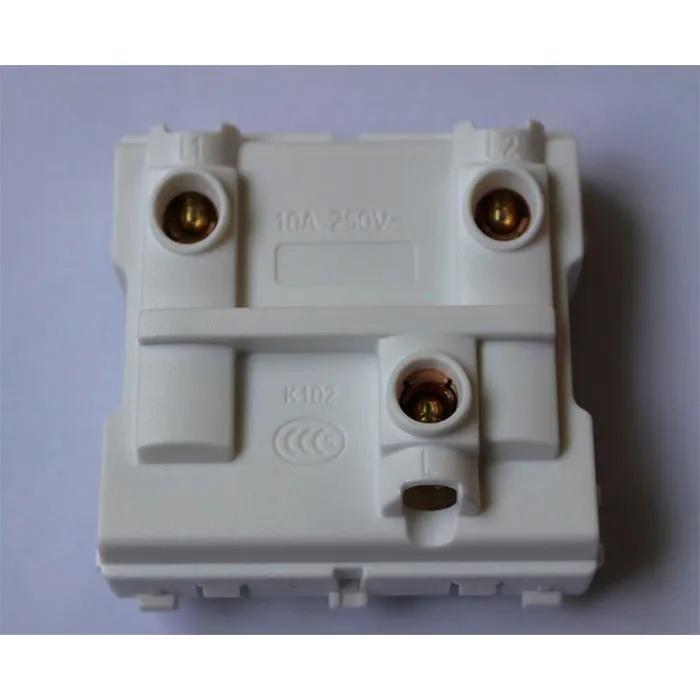
What are the core differences between 10A and 16A wall switches?
Below is a comparison of the two from an electrical engineering perspective.
What are the differences in rated current between 10A and 16A wall switches?
Rated current is the most direct difference between the two.
A 10A wall switch has a rated current of 10A and a maximum power handling capacity of 2200W.
A 16A wall switch has a rated current of 16A and a maximum power capacity of 3520W.
Current capacity directly determines the power of controllable devices and also determines safety.
What are the differences in internal structure between a 10A and a 16A wall switch?
From an electrical engineering perspective, a 16A wall switch is significantly more robust than a 10A wall switch:
1. Different copper sheet thickness
• Thicker copper sheet in the 16A switch
• Larger contact surface
• Greater heat resistance
2. Larger, more wear-resistant contacts
16A switches must withstand higher currents, therefore the contact materials and structure are more advanced.
3. Higher heat resistance of the housing material
16A wall switches typically use high-temperature resistant materials to prevent aging or deformation of the plastic under prolonged high loads.
4. Larger terminals
16A wall switches can accept thicker wires, such as 2.5mm² conductors.
Generally, 10A terminals may not be suitable for very thick wires.
How do 10A and 16A wall switches differ in terms of applicable appliances?
This is a question consumers care about most—what appliances can different wall switches power?
Suitable appliances for a 10A wall switch:
• LED lighting fixtures
• Standard ceiling lights
• Small exhaust fans
• Low-current devices
Suitable appliances for a 16A wall switch:
• Large lighting fixtures (such as multi-light crystal chandeliers)
• Bathroom heaters and ventilation motors
• Low-power water heaters
• High-power exhaust fans
• Large-space lighting systems
The selection criterion is simple: Higher-power appliances require a 16A wall switch.
Why can't a 10A wall switch replace a 16A one?
Some users believe that "a 10A switch can also be used, as long as it's not too high." This is a misconception.
Potential risks include:
1. Severe switch overheating: The higher the current, the more noticeable the heat, leading to rapid aging.
2. Contacts are prone to burning: 10A contacts are prone to arcing when subjected to currents exceeding 16A, damaging the switch.
3. Wire terminals may loosen: Wires with excessively thick diameters (e.g., 2.5mm²) may not insert properly or be securely fastened.
4. Potential risk of short circuits or fire: Therefore, the electrical industry clearly stipulates that circuits with a load ≥10A must use a 16A wall switch.
When should you choose a 10A wall switch? When should you choose a 16A wall switch?
The following provides professional judgment based on specific scenarios.
Scenarios requiring a 10A wall switch:
• General household lighting fixtures
• LED light strips
• Small lighting fixtures and decorative lights
• Standard exhaust fans
• Low-power scenarios
Scenarios requiring a 16A wall switch:
• Large crystal chandeliers
• Multi-bulb ceiling lights
• Bedroom bathroom heater/ventilation systems
• High-power kitchen exhaust fans
Scenarios requiring higher durability
The order is very clear—the higher the power consumption, the more necessary a 16A switch should be.
Can a 10A wall switch be replaced with a 16A wall switch?
Yes.
If you are concerned about the load, choosing 16A will be safer.
However, please note:
• You must check that the wire gauge is within the standard range.
• It is not recommended to arbitrarily increase the load standard in a purely lighting circuit.
Electrical systems require unified design, but from the perspective of a single switch, 16A has higher compatibility.
What problems can arise from choosing the wrong wall switch?
Choosing the wrong wall switch specification can lead to:
1. Increased switch temperature
2. Contact erosion and extremely short lifespan
3. Frequent switch tripping
4. Potential fire hazard after prolonged use.
Therefore, selecting a wall switch with the correct specification is a very serious and critical electrical safety issue.
What is the real difference between a 10A and 16A wall switch for home use?
Based on the analysis above, the final conclusions are as follows:
10A wall switch characteristics:
• For general lighting
• Maximum power approximately 2200W
• Suitable for low-load environments
• Low cost and wide application
16A wall switch characteristics:
• For high-load or high-power equipment
• Maximum power approximately 3500W
• Suitable for large light fixtures, exhaust fans, bathroom heaters, etc.
• More stable structure and higher safety
Final recommendation: How to choose a 10A or 16A wall switch?
If you are installing general lighting fixtures, choose 10A.
If you are controlling high-power equipment, choose 16A.
Simple, clear, and safe.
What facilities and production capacity does your factory have?
Located in Foshan — a major industrial hub in Guangdong — our company operates production facilities capable of handling both small custom runs and large-scale manufacturing. Over nearly ten years we have scaled our processes, adopted efficient production lines and established quality management protocols.
This capacity allows us to be a dependable supplier for both one-time purchases and recurring wholesale orders.
