


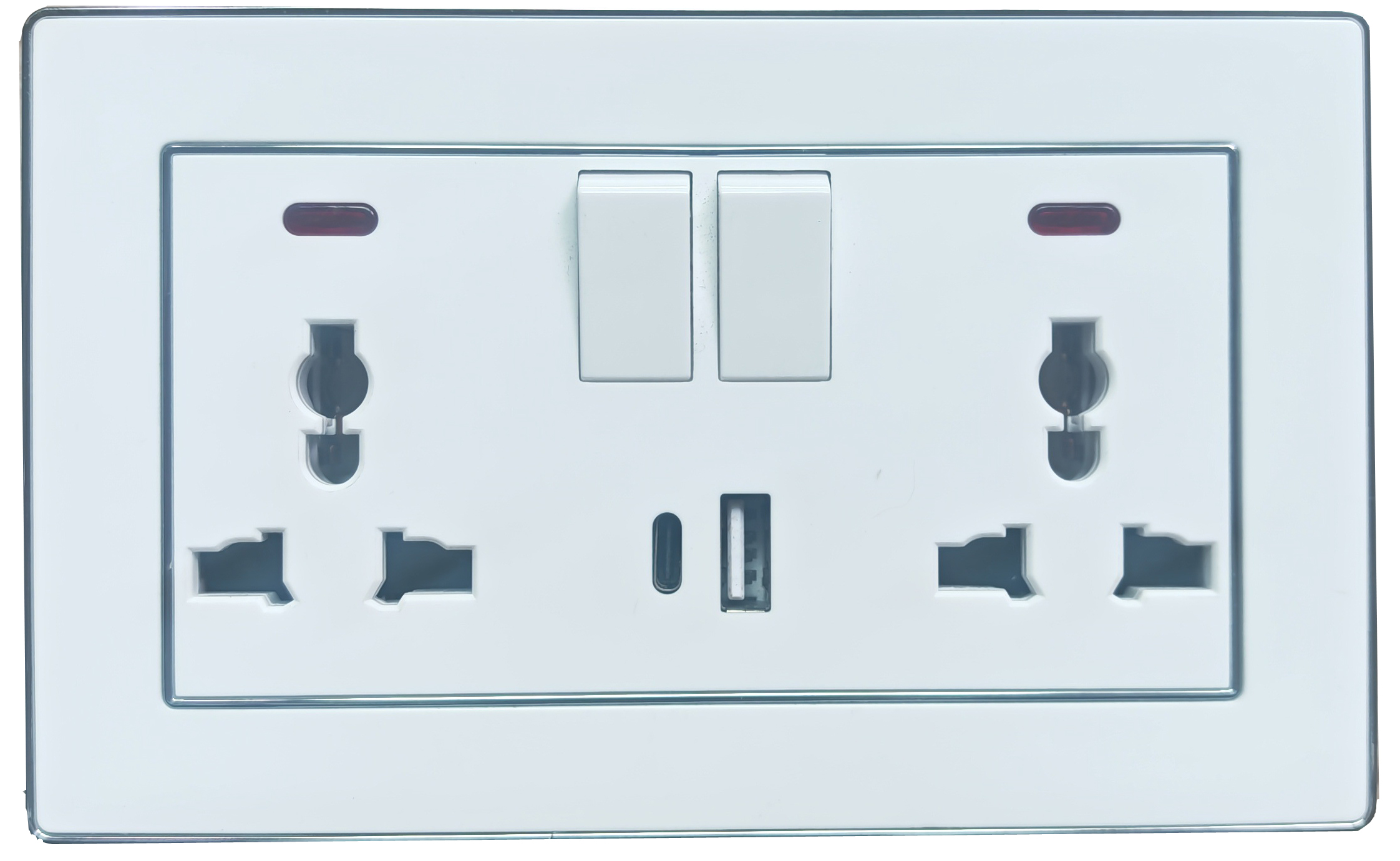
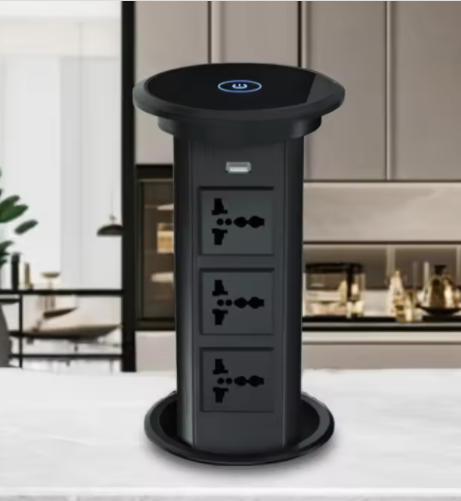
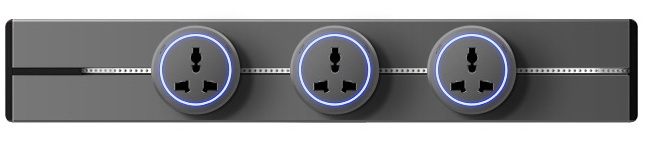
In the global electrical socket system, the British (UK) standard socket is renowned for its stringent safety regulations, unique structural design, and unified national standards. The most common socket in the UK is the UK 3-hole socket, which conforms to the BS 1363 standard.
However, in the global cross-border e-commerce and home renovation sectors, more and more people are paying attention to another structural form—the 5-hole socket.
This leads to a common question: Which is better, a UK 3-hole socket or a 5-hole socket? How should you choose?
This article will systematically and professionally analyze the differences and advantages of UK 3-hole and 5-hole sockets, helping you understand their applicability in different environments and make an informed choice.
Why does the UK generally use 3-hole sockets?
The UK adopts the BS 1363 standard, whose socket structure has three holes: live wire, neutral wire, and ground.
The UK 3-hole socket (BS 1363) has the following characteristics:
• Plug with built-in fuse
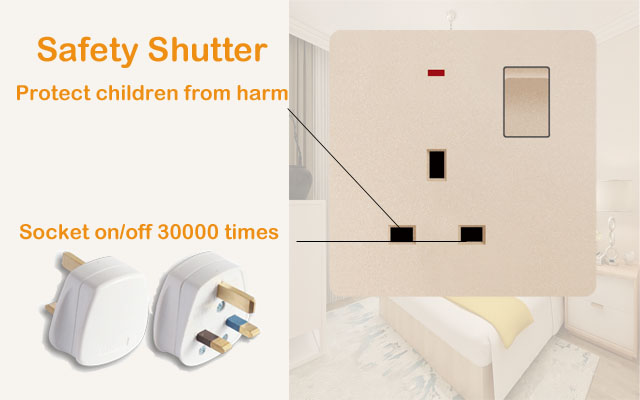
• Socket with built-in safety shutter
• The grounding pin on the plug is longer than the other pins, prioritizing grounding upon insertion
• Rated current of 13A
• Suitable for 230V voltage systems
• Includes multiple control switches
These features constitute the highest level of safety standards in the UK electrical system, making the UK 3-hole socket a core component of both residential and commercial environments.
In contrast, 5-hole sockets are less commonly seen, typically used for multi-country compatibility or special adaptation scenarios. Therefore, many people wonder: since the UK has a standard 3-prong system, why are 5-hole sockets still available on the market? Are 5-hole sockets better than 3-hole sockets?
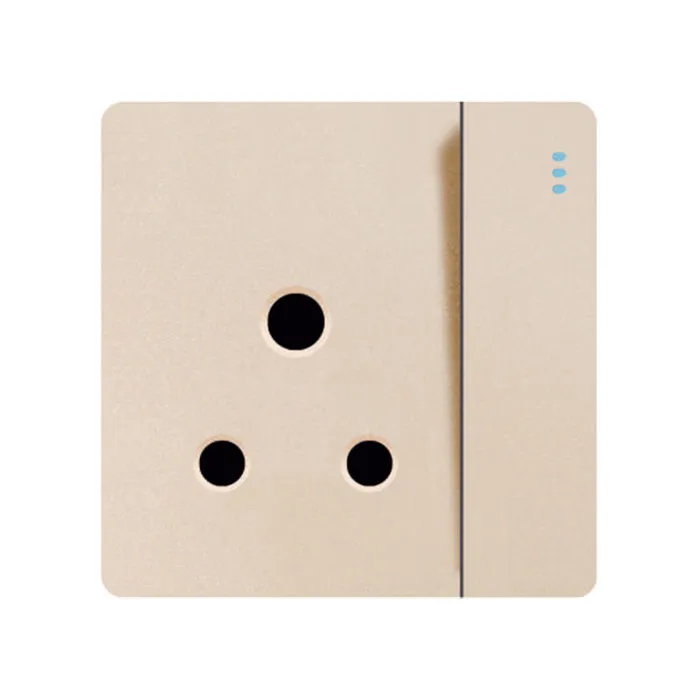
What are the structural differences between UK 3-prong and 5-hole sockets?
UK 3-hole socket (BS1363 socket) structure:
• Three holes arranged in an inverted triangle
• Consists of a live wire, neutral wire, and grounding hole
• Plug with fuse
• Most sockets have an independent switch
• Complies with UK National Electrical Safety Standards
This socket format is the most common and standardized used by UK residents.
5-hole socket structure:
• One set of three-prong sockets
• Another set of two-prong flat sockets
• Or a five-hole combination socket compatible with multiple plug types
Its main purpose is:
• To provide compatibility with more types of devices
• To allow users to connect two different plug types simultaneously
However, importantly: There is no official "5-hole socket" format in the UK National Standards (BS 1363).
This means that when 5-hole sockets appeared in the UK market, they were mostly multi-functional sockets designed by third parties, rather than part of the UK standard system.
What does the emergence of the 5-hole socket mean? Is it suitable for the UK?
To understand the properties of a 5-hole socket, two concepts must be distinguished:
1. UK Official Standard Sockets: Only 3-hole UK Standard (BS 1363) sockets are permitted.
UK residential and public buildings prohibit the installation of sockets that do not meet the BS 1363 standard, including non-standard 5-hole sockets. The reasons are:
• They do not comply with UK electrical regulations.
• They lack the necessary UK plug fuse protection.
• They do not guarantee compliance with UK safety and fire protection requirements.
Therefore, if the question is: Can a 5-hole socket be used as a formal socket in a UK household?
The answer is: No.
2. 5-hole sockets can be used in scenarios outside the UK, such as foreign trade, office desktop extension cords, and international travel adapters.
These scenarios are not part of the UK fixed wiring system and are not restricted by BS 1363 regulations, therefore, multi-functional 5-hole sockets can be used.
Therefore, 5-hole sockets are more often used for:
• Multi-standard compatibility
• International user needs
• Office desktop power strips
• Hotel international socket compatibility slots
However, within UK buildings, 5-hole sockets are not part of the officially recognized electrical system.
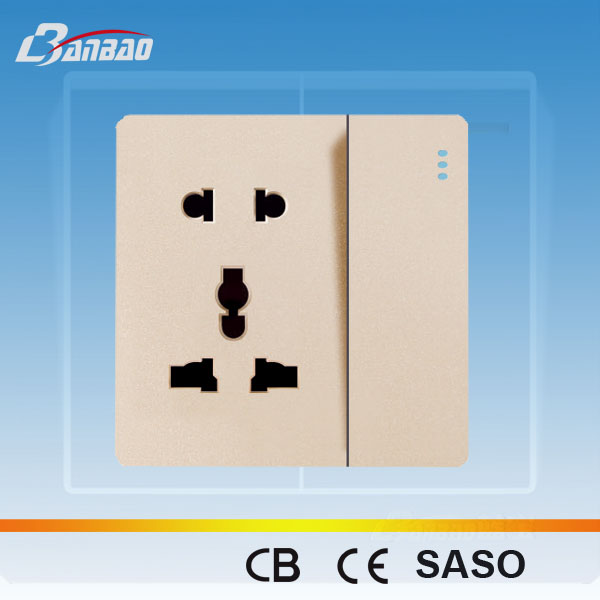
What are the advantages of UK 3-hole sockets?
To compare whether UK 3-prong or 5-prong sockets are better, we must first understand the core advantages of UK 3-prong sockets in the UK electrical system.
1. Comprehensive Safety System
The safety mechanisms of UK 3-hole sockets include:
• Socket safety shutters
• Built-in fuses in the plugs
• Grounding priority mechanism
• Power-off control with switch
• High current carrying capacity of 13A
Its overall safety is far superior to socket formats in many other countries.
2. High Degree of National Standardization
All sockets in UK residences, shops, hotels, and schools use the standardized 3-prong UK standard, resulting in:
• High versatility
• High interchangeability
• Ease of maintenance
3. Fully Compatible with the UK 230V Voltage System
The 3-prong socket is designed for 230V high voltage, and its structural safety has been proven over a long period.
4. Plug Fuses Provide Device-Level Protection
While most countries worldwide use plugs without fuses, the UK uses the BS 1363 plug with a fuse, providing a higher level of protection.
So, what are the advantages of a 5-hole socket?
Although the 5-hole socket is not part of the UK's fixed wiring standard, it still has significant advantages in certain scenarios.
1. Enhanced Plug Compatibility
The main advantage of the 5-hole socket is its compatibility:
• Supports both three-prong and two-prong plugs simultaneously
• Allows for the coexistence of plugs from different countries
• More suitable for cross-border users or international environments
For global travelers or users of devices from multiple countries, the 5-hole socket offers considerable convenience.
2. More Flexible Usage
Because the 5-hole socket can provide two types of holes in a single socket panel, its flexibility far exceeds that of the single-standard 3-hole socket.
3. Better Fit for Desktop Environments
In offices, hotel desks, or multi-device environments, the 5-hole socket reduces the problem of reusing multiple adapters.
How do the safety levels of UK 3-hole and 5-hole sockets compare?
Safety is one of the most important factors when choosing an socket.
UK 3-hole sockets are extremely safe
Reasons include:
• Based on the BS 1363 national standard
• Plugs with fuses
• Sockets with safety shutters
• Live wire control switch
• Strictly controlled copper thickness and materials
These ensure that UK 3-hole sockets:
• Are less prone to overloading
• Are less prone to short circuits
• Are less prone to accidental contact
• Are safer for children
• Have clear power-off control
5-hole socket safety depends on product quality
Because 5-hole sockets are not an official UK standard, product quality varies greatly.
Therefore:
• Many 5-hole sockets lack safety shutters
• Lack the UK plug fuse system
• A wider range of socket compatibility may lead to unstable contact
• Some models are not suitable for high-power devices
• Safety certifications are inconsistent.
Therefore, their safety depends on brand, materials, and design, and is not as stable and reliable as the UK standard 3-hole socket.
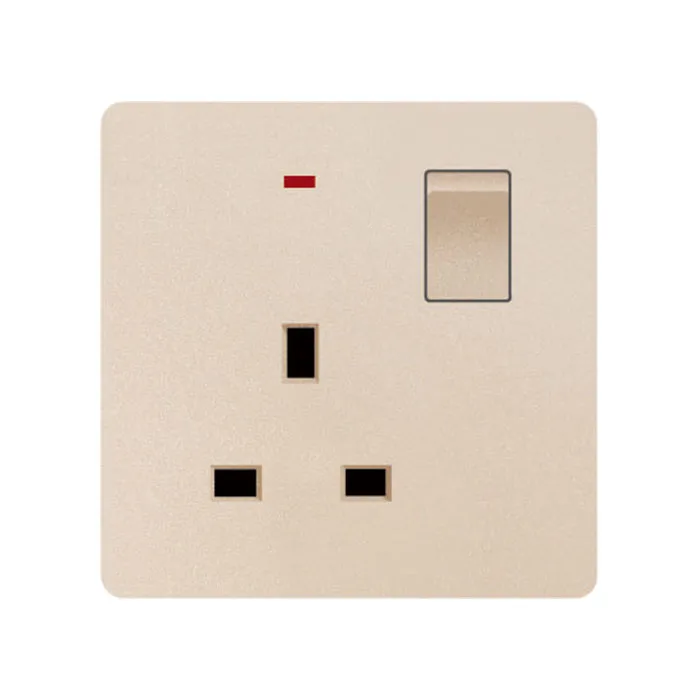
Which is better, a UK 3-prong or 5-hole socket?
To answer this core question, it's crucial to clarify: "Better" doesn't equate to "more universal," but rather depends on the usage environment and safety standards.
For installation and use within the UK: UK 3-hole sockets are better (and the only legal choice).
Reasons include:
• Compliant with BS 1363 national standard
• Higher safety level
• More robust plug and fuse system
• Capable of handling typical high-power UK appliances
• The only legally permitted standard in the UK.
Therefore, for use in the UK, UK 3-hole sockets are undoubtedly the better and safer choice.
For international compatibility scenarios: 5-hole sockets are better
Examples:
• Office environments
• Hotel rooms
• International users
• International travel adapters
• Desktop extension sockets
5-hole sockets can support both two-prong and three-prong plugs simultaneously, offering far greater flexibility than the UK 3-prong standard outlet.
How to determine which type of socket you should choose?
Here are simple and clear criteria for choosing a UK 3-hole socket:
Choose a UK 3-hole socket if:
• You are renovating or installing in the UK
• You are using UK-made electrical appliances
• You require the highest level of safety protection
• The outlet will be used for wall-mounted wiring
• You have strict safety requirements
Choose a 5-hole socket if:
• The socket will be used on a desktop, in an office, or on a portable power strip
• You are using devices from multiple countries
• You need compatibility with both two-prong and three-prong plugs
• You are not subject to UK wall-mounted wiring regulations
• You need more flexibility than safety
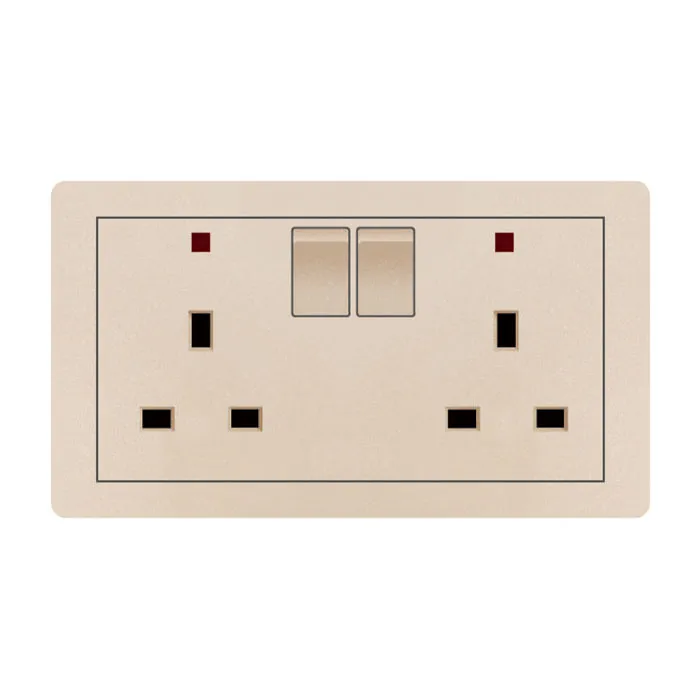
Whether a UK 3-Hole or 5-hole socket is better depends on the usage environment
For use within the UK: A UK 3-hole socket is better and safer.
• Complies with BS 1363 standards
• Nationally mandated
• Fuse + safety shutter + switch system
• Fully compatible with UK 230V high voltage
For international compatibility scenarios: A 5-hole socket is better.
• Supports more plug types
• High flexibility
• Suitable for office, hotel, and travel environments
Therefore, "better" cannot be generalized; it depends on your electrical system and usage needs.
How cost-effective are your products — do you offer cheap options or low-price lines?
We provide a range of cost-effective product options to meet different market tiers. While we emphasize high quality and safety, our factory capabilities enable us to offer lower-priced standard models and volume discounts for large purchases. For customers seeking cheap solutions, we maintain standard product lines engineered for affordability without sacrificing essential safety standards.
